TEL:
+86-13102802206
TEL:
+86-13102802206
 Email:
fencenetting@china.com
Email:
fencenetting@china.com
 Language
TEL:
+86-13102802206
Email:
fencenetting@china.com
Language
Language
TEL:
+86-13102802206
Email:
fencenetting@china.com
Language


1mm stainless steel wire is a versatile material widely used across diverse industries. Its unique combination of strength, corrosion resistance, and flexibility makes it ideal for a multitude of applications. From manufacturing springs and mesh to securing cables and creating art, this wire offers a durable and reliable solution. This article explores the properties, common uses, and advantages of 1mm stainless steel wire, guiding you through its potential for your specific needs. Explore our range of wire products at TY Wire Mesh to find the perfect solution for your project.
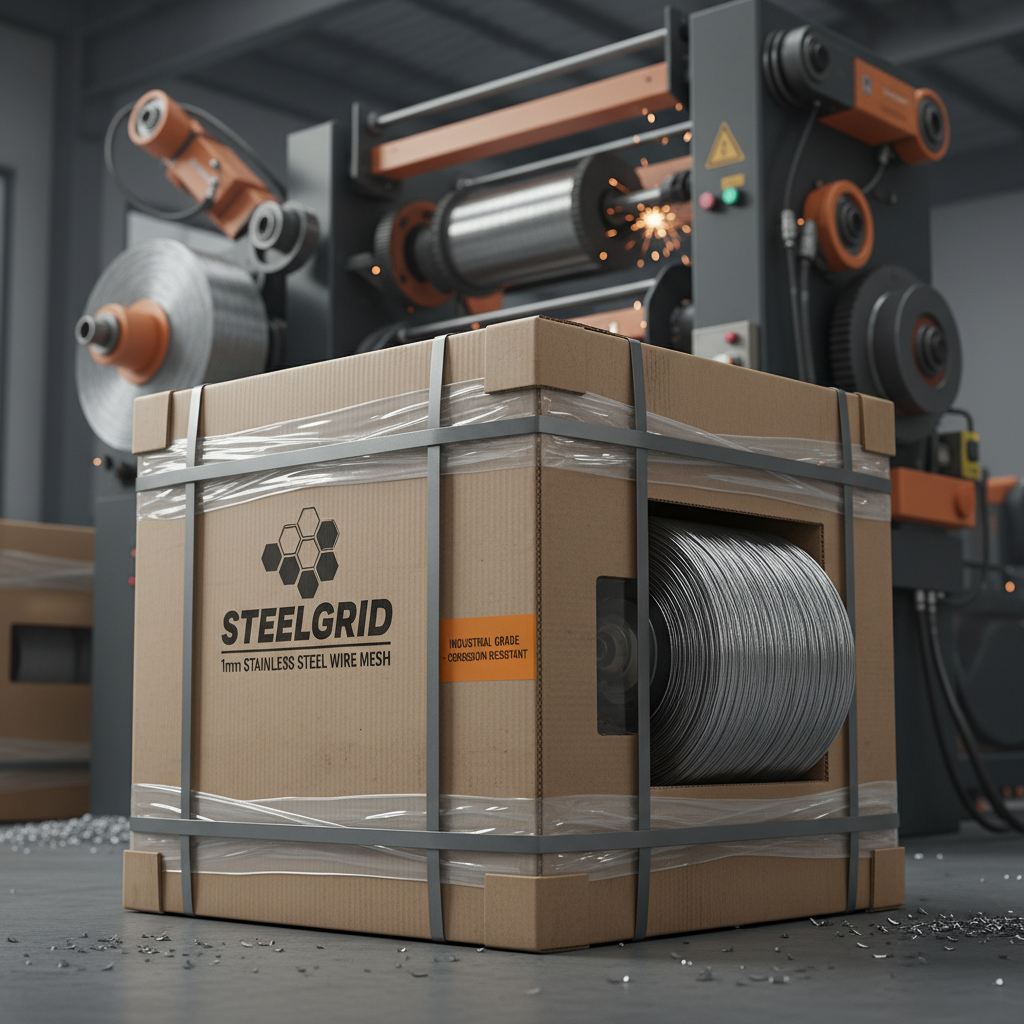
1mm stainless steel wire derives its exceptional qualities from its composition, primarily chromium. This chromium content creates a passive layer of chromium oxide on the surface, providing excellent corrosion resistance. Beyond that, the wire boasts high tensile strength, making it capable of withstanding significant loads. It’s also surprisingly flexible, allowing for intricate shaping and forming. Different grades of stainless steel (304, 316, etc.) will exhibit slightly varying properties, influencing their suitability for specific applications. Understanding these differences is crucial for choosing the right wire for your project. Discover a variety of stainless steel wire options at TY Wire Mesh.
Key Highlights: Offers high tensile strength, excellent corrosion resistance, and flexibility. Available in various grades (304, 316, etc.) to suit specific application requirements.
The versatility of 1mm stainless steel wire leads to its widespread use in numerous industries. It's frequently utilized in the production of springs, offering durability and resilience. In the construction sector, it serves as a crucial component in cable ties and reinforcement mesh. The food processing and pharmaceutical industries benefit from its hygienic properties, utilizing it in filtering systems and packaging. Craftsmen and artists employ the wire for sculpting and creating intricate jewelry. Furthermore, its resistance to harsh environments makes it ideal for marine applications, such as rigging and boat hardware.
Application Areas:
• Spring Manufacturing
• Cable Ties & Reinforcement Mesh
• Food Processing & Pharmaceutical Filters
• Art Sculptures & Jewelry
• Marine Rigging & Hardware
Choosing the appropriate grade of stainless steel wire is essential for optimal performance. 304 stainless steel is the most common grade, offering good corrosion resistance and affordability. 316 stainless steel contains molybdenum, enhancing its resistance to chloride corrosion, making it ideal for marine environments. 304L and 316L are low-carbon versions, offering improved weldability. The following table summarizes the key differences:
Opting for 1mm stainless steel wire presents several significant advantages. Its exceptional corrosion resistance minimizes maintenance and extends the lifespan of your projects. The high tensile strength ensures durability and reliability, even under demanding conditions. Its inherent hygienic properties make it suitable for sensitive applications. Furthermore, stainless steel is recyclable, aligning with environmentally conscious practices. When compared to other materials like carbon steel or aluminum, stainless steel wire often offers a superior long-term value proposition.
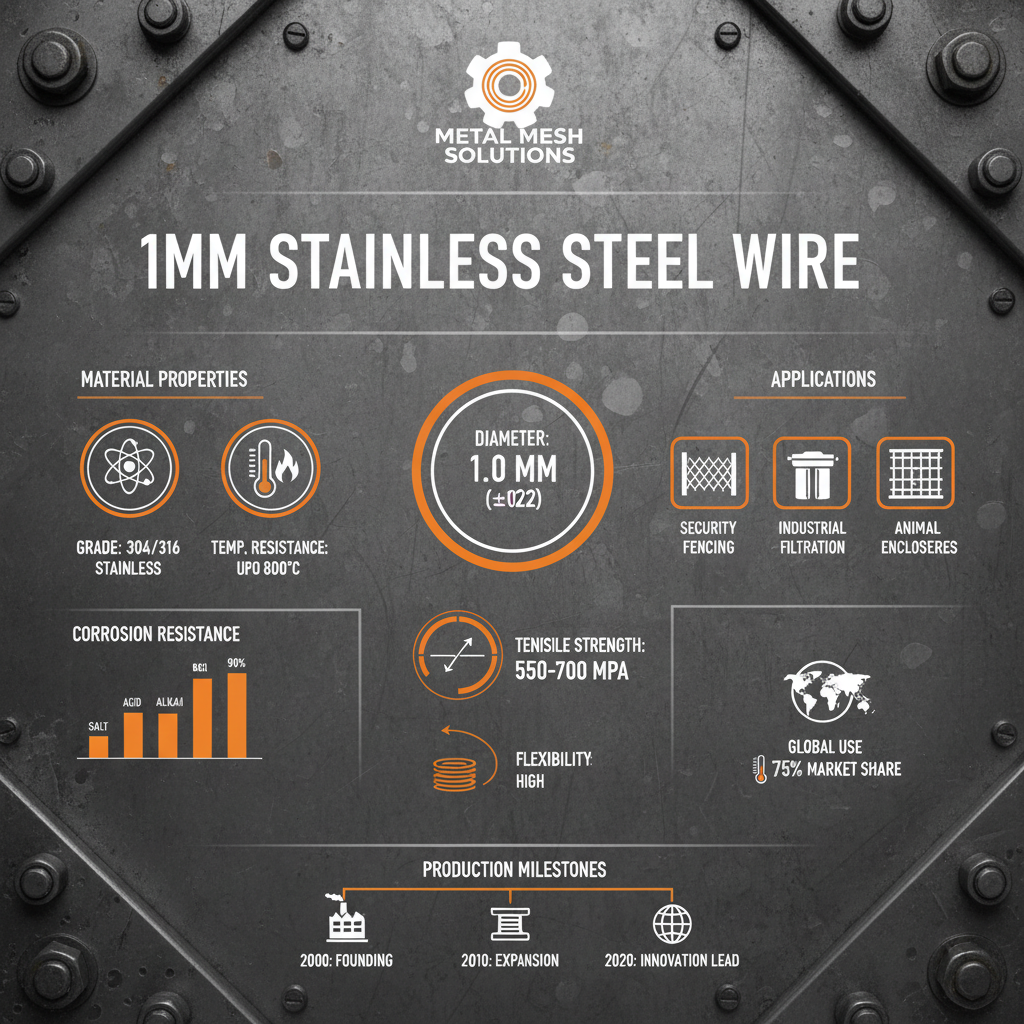
At TY Wire Mesh, we offer 1mm stainless steel wire in a variety of grades and finishes to meet your specific needs. Choose from 304, 316, 304L, and 316L grades. We also provide options for different surface finishes, including bright annealed, polished, and pickled. Wire is available in various coil weights and custom cut lengths. Please see the product specification table below.
Selecting the right 1mm stainless steel wire requires careful consideration of your application's specific demands. By understanding the different grades, properties, and advantages, you can make an informed decision that ensures optimal performance and longevity. TY Wire Mesh provides a comprehensive selection of high-quality stainless steel wire products and expert guidance to help you find the perfect solution for your project.
The tensile strength of 1mm stainless steel wire varies slightly depending on the grade. Generally, it falls within the range of 500-700 MPa (megapascals). 304 stainless steel typically has a tensile strength of around 510 MPa, while 316 stainless steel can reach up to 620 MPa. This high tensile strength ensures that the wire can withstand significant pulling forces without breaking, making it suitable for applications requiring structural integrity. The specific tensile strength will also be influenced by the manufacturing process and any cold working that has been performed on the wire.
Yes, 1mm stainless steel wire can be welded, but the weldability varies depending on the grade. 304L and 316L grades are specifically designed for improved weldability due to their lower carbon content. These lower carbon levels minimize the formation of chromium carbides during welding, which can lead to corrosion resistance issues. Proper welding techniques and filler metals are crucial to ensure a strong and corrosion-resistant weld. Using appropriate shielding gas and controlling the heat input are also essential for achieving optimal results.
1mm stainless steel wire is commonly packaged in coils of varying weights, ranging from 5kg to 500kg or more. These coils are typically wrapped in protective packaging, such as plastic film or burlap, to prevent damage during transit. The coils are then secured on pallets and wrapped with stretch film for stability. TY Wire Mesh ensures secure packaging and reliable shipping to guarantee that your wire arrives in perfect condition.
To maintain the quality and integrity of 1mm stainless steel wire, it's best to store it in a dry, well-ventilated area, protected from direct sunlight and extreme temperatures. Avoid storing it near corrosive materials or chemicals. If the wire is exposed to moisture, it should be dried thoroughly before storage. Proper storage prevents surface contamination and ensures that the wire remains in optimal condition for its intended application.