TEL:
+86-13102802206
TEL:
+86-13102802206
 Email:
fencenetting@china.com
Email:
fencenetting@china.com
 Language
TEL:
+86-13102802206
Email:
fencenetting@china.com
Language
Language
TEL:
+86-13102802206
Email:
fencenetting@china.com
Language


In the realm of high-stakes industries like aerospace, motorsports, and precision engineering, securing critical components is paramount. 032 safety wire stands as a trusted and reliable method for preventing fasteners from loosening due to vibration or other forces. This article provides a deep dive into the characteristics, applications, and best practices associated with 032 safety wire, ensuring a secure and dependable solution for your critical fastening needs. It’s crucial to choose the right safety wire for your specific application, and understanding its properties is the first step towards achieving optimal performance.
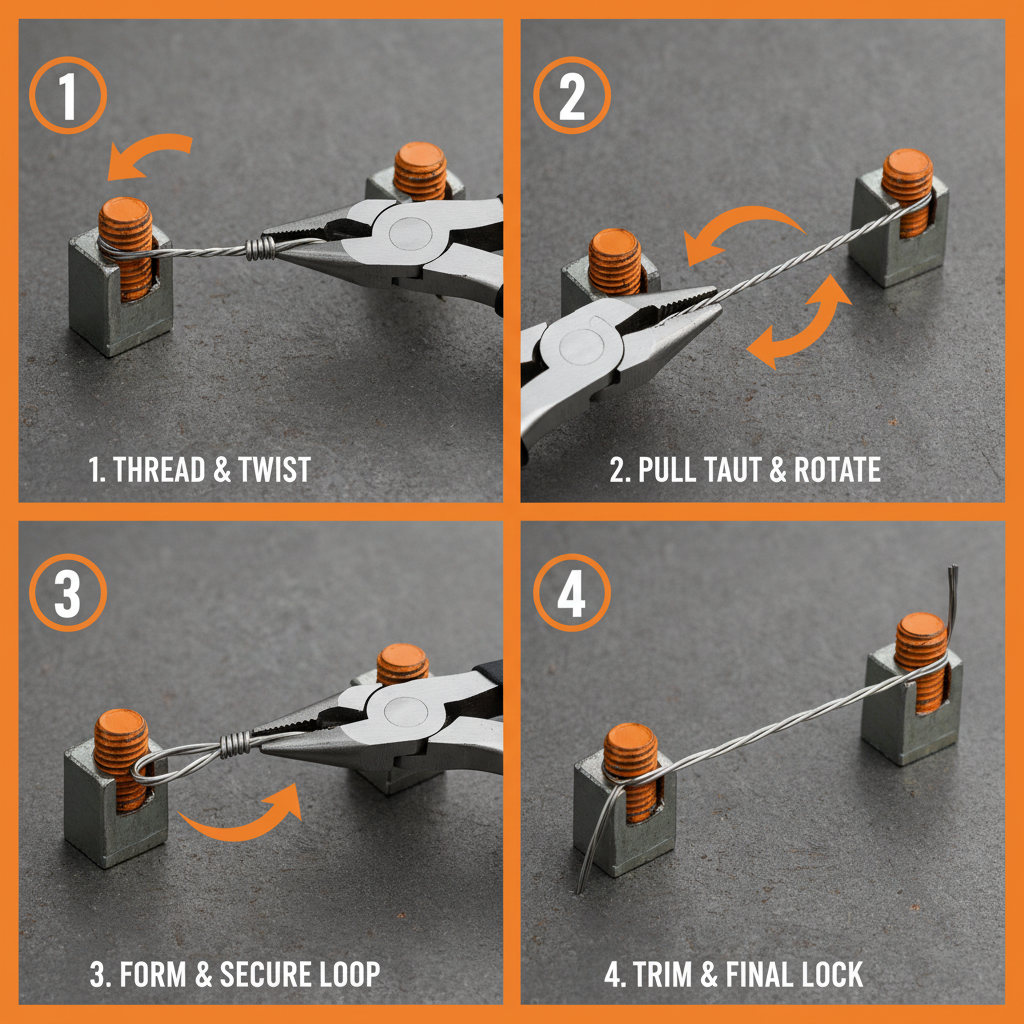
032 safety wire refers to a specific diameter of stainless steel wire commonly used for safetying fasteners. The "032" denotes the wire's diameter in inches (0.032 inches, or approximately 0.81 millimeters). This wire is characterized by its high tensile strength, corrosion resistance, and malleability – making it ideal for twisting around fastener heads and securing them in place. Unlike other locking mechanisms, safety wire doesn't rely on adhesives or friction, instead utilizing the principle of positive locking to prevent unintended loosening. Its use is governed by strict standards and procedures, particularly in aviation, to ensure consistent and reliable safety. A well-executed safety wire installation is a visible indication of a conscientious approach to maintenance and reliability.
Key Highlights: 032 safety wire is valued for its high tensile strength, corrosion resistance, and the positive locking mechanism it provides. This wire is a cost-effective and reliable method for preventing fastener loosening in critical applications.
The versatility of 032 safety wire makes it suitable for a broad spectrum of applications. Its primary use is in aerospace, where it safeguards critical engine components, control surfaces, and landing gear fasteners. Beyond aerospace, it’s commonly employed in motorsports to secure wheel lugs, exhaust systems, and various engine parts. In the oil and gas industry, it’s used to protect connections in pipelines and equipment. Even in some high-performance automotive applications, enthusiasts utilize 032 safety wire to enhance the reliability of crucial components. Proper application of safety wire is essential, and specific procedures are often dictated by industry regulations.
Key Application Areas:
• Aerospace: Engine components, control surfaces
• Motorsports: Wheel lugs, exhaust systems
• Oil & Gas: Pipeline connections, equipment
• Automotive: High-performance engine parts
While various methods exist for preventing fastener loosening, 032 safety wire offers distinct advantages. Unlike lock washers, which rely on spring tension and can lose effectiveness over time, safety wire provides a positive mechanical lock. Compared to thread-locking adhesives, which can be messy and require specific application procedures, safety wire is a clean and straightforward solution. Cotter pins, while reliable, require pre-drilled holes, potentially weakening the fastener. Safety wire provides a versatile solution that doesn't require modification of the fastener itself. The visual confirmation of a properly installed safety wire offers an added layer of assurance.
Proper installation is vital for the effectiveness of 032 safety wire. Use the correct tools – dedicated safety wire pliers are essential for creating consistent and secure twists. Ensure the wire is twisted tightly around the fastener heads, creating a positive lock that resists loosening. Avoid over-tightening, which can damage the wire or the fastener. Follow established procedures for the specific application, as regulations often dictate specific wiring patterns. Regular inspection of installed safety wire is crucial to identify any signs of wear, corrosion, or loosening. For high-quality 032 safety wire and related tools, choose a reputable supplier.
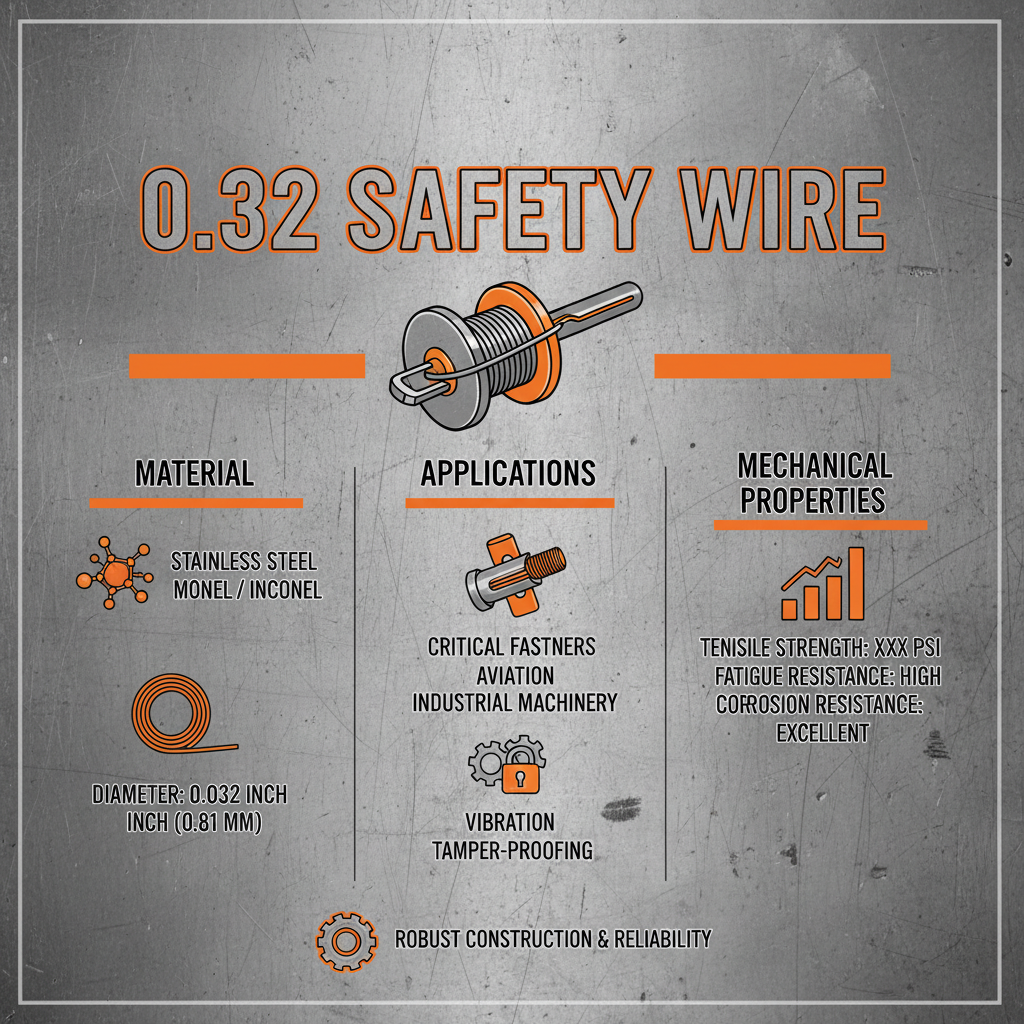
032 safety wire is typically manufactured from 304 or 316 stainless steel, chosen for their corrosion resistance and high tensile strength. The specific grade of stainless steel used will depend on the application environment. Aerospace applications often require 316 stainless steel for its superior resistance to harsh conditions. The wire’s tensile strength is a critical specification, ensuring it can withstand the forces encountered during operation. It is important to verify that the wire meets relevant industry standards, such as those set by the FAA or other regulatory bodies.
032 safety wire is an indispensable component in numerous industries where fastener security is paramount. Its combination of strength, reliability, and corrosion resistance makes it a superior choice over many alternative locking methods. By understanding its properties and adhering to best practices for installation, you can ensure the long-term integrity of your critical systems. For dependable safety wire solutions, TY Wire Mesh is your trusted partner.
Dedicated safety wire pliers are essential for proper installation. These pliers are designed with jaws specifically shaped for gripping, twisting, and cutting the wire. Using standard pliers can result in inconsistent twists and potentially weaken the wire. Investing in a quality set of safety wire pliers will ensure a secure and reliable installation. Different jaw profiles are available to accommodate various wire twisting styles and fastener configurations.
Several twisting techniques exist, including the 'over-and-under' method, which provides a secure lock, and the 'wrap-around' method, often used for accessibility. The correct technique depends on the fastener configuration and industry standards. Always consult relevant documentation or training materials to ensure you're using the appropriate method for your application. Consistency in technique is also crucial for maintaining reliability.
Regular inspection is vital. The frequency depends on the severity of the service environment. For critical applications, inspections should be performed before each operation. For less demanding environments, monthly or quarterly inspections may suffice. Look for signs of corrosion, fraying, or loosening. Replace any wire that shows damage or signs of compromise. Maintaining a log of inspections can help track the condition of the safety wire and identify potential issues.
Generally, it is not recommended to reuse safety wire. Once the wire has been twisted and tightened, its structure is altered. Reusing it can compromise its strength and reliability. It's best to replace the wire with a new piece each time to ensure a secure and dependable lock. The cost of new wire is minimal compared to the potential consequences of fastener failure.