TEL:
+86-13102802206
TEL:
+86-13102802206
 Email:
fencenetting@china.com
Email:
fencenetting@china.com
 Language
TEL:
+86-13102802206
Email:
fencenetting@china.com
Language
Language
TEL:
+86-13102802206
Email:
fencenetting@china.com
Language


Stainless wire mesh is a versatile material used in a wide range of industries, from filtration and screening to security and architectural applications. Its corrosion resistance, durability, and adaptability make it a popular choice for demanding environments. This article will delve into the properties, types, applications, and benefits of stainless wire mesh, providing a comprehensive overview for engineers, purchasing managers, and anyone seeking a reliable and high-performance material. We will explore how choosing the right type of stainless wire mesh can significantly improve the efficiency and longevity of your projects.

Stainless wire mesh is fabricated from stainless steel wire, woven or welded together to create a mesh structure. The defining characteristic of stainless steel is its high chromium content, which forms a passive layer of chromium oxide on the surface, preventing corrosion. This makes stainless wire mesh ideal for applications where exposure to moisture, chemicals, or extreme temperatures is a concern. The mesh's properties can be further tailored by varying the alloy composition, wire diameter, and weave pattern. You can explore various options and specifications at TY Wire Mesh.
Key Highlights: Corrosion resistance, durability, versatility, and adaptability make it ideal for demanding applications.
Several types of stainless wire mesh are available, each offering unique characteristics. Common types include: 304 stainless steel mesh, 316 stainless steel mesh, and 430 stainless steel mesh. 304 is the most common grade, offering excellent corrosion resistance for general-purpose applications. 316 contains molybdenum, enhancing its resistance to chlorides and making it suitable for marine environments. 430 offers lower corrosion resistance but is more affordable. The selection of the appropriate type depends on the specific requirements of the application.
Stainless Steel Grade Comparison:
• 304: Excellent corrosion resistance, versatile, commonly used.
• 316: Superior corrosion resistance, ideal for marine and chemical environments.
• 430: Lower cost, good corrosion resistance for indoor applications.
The applications for stainless wire mesh are incredibly diverse. It's commonly used in filtration systems for liquids and gases, offering precise particle separation. In the food and beverage industry, it’s used for screening and sieving ingredients. Security applications include constructing protective cages and barriers. Architecturally, it’s used for facade cladding and decorative elements. Furthermore, it finds use in chemical processing, pharmaceutical manufacturing, and aerospace. TY Wire Mesh caters to a broad spectrum of these industries.
Selecting stainless wire mesh offers numerous advantages. Its exceptional corrosion resistance ensures a long service life, reducing replacement costs. Its durability withstands demanding conditions and heavy use. It's easily cleaned and maintained. Moreover, stainless wire mesh is recyclable, contributing to sustainable practices. The versatility in weave patterns and wire diameters allows for precise customization to meet specific application needs. For superior quality and performance, TY Wire Mesh provides a wide selection to choose from.
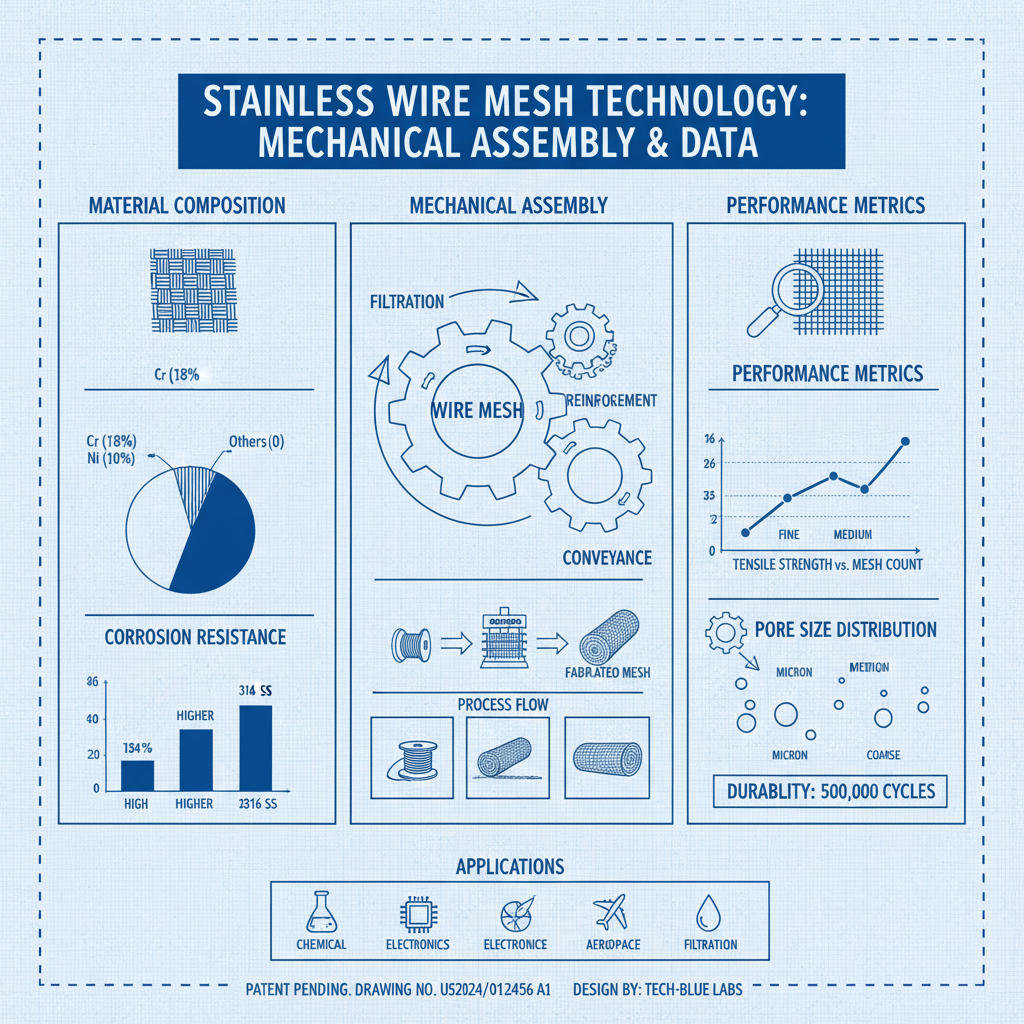
When specifying stainless wire mesh, several key parameters must be considered. These include the wire diameter, aperture size (mesh opening), weave pattern (e.g., plain weave, twill weave), and dimensions of the mesh sheet. The mesh count refers to the number of wires per inch. Selecting the correct specifications is crucial for achieving optimal performance. For more detailed information on these specifications and to request a quote, visit TY Wire Mesh.
Stainless wire mesh stands as a reliable and versatile material for a wide array of applications. Its corrosion resistance, durability, and adaptability make it a superior choice for demanding environments. When selecting a supplier, prioritize quality and expertise. TY Wire Mesh offers a comprehensive range of stainless wire mesh products to meet your specific needs. Investing in high-quality stainless wire mesh ensures long-term performance and cost-effectiveness.
For marine applications, 316 stainless steel is the most recommended grade. Its inclusion of molybdenum significantly enhances its resistance to chloride corrosion, a major concern in saltwater environments. While 304 stainless steel offers good corrosion resistance, it is susceptible to pitting and crevice corrosion in prolonged exposure to saltwater. Therefore, 316 provides superior long-term performance and durability in marine conditions. You can find various 316 stainless steel mesh options at TY Wire Mesh.
Cleaning stainless wire mesh is relatively straightforward. For general cleaning, use mild soap and water. Avoid abrasive cleaners, as they can damage the surface and reduce corrosion resistance. For stubborn stains or deposits, specialized stainless steel cleaners are available. Always rinse thoroughly with clean water after cleaning and allow the mesh to dry completely. Avoid using steel wool or abrasive pads that can leave behind particles that promote corrosion.
Yes, stainless wire mesh can be welded, but it requires specific techniques and considerations. The weld should be performed using a stainless steel welding rod compatible with the mesh's alloy (e.g., 304 or 316). Proper surface preparation and shielding gas are essential to prevent oxidation and ensure a strong, corrosion-resistant weld. It's often recommended to consult with a qualified welder experienced in working with stainless steel wire mesh.
Lead times for custom stainless wire mesh orders vary depending on the complexity of the order, the quantity required, and current production schedules. Generally, standard orders can be fulfilled within 1-2 weeks. More complex orders or larger quantities may take 3-4 weeks or longer. TY Wire Mesh provides accurate lead time estimates upon receiving order specifications.