TEL:
+86-13102802206
 Email:
fencenetting@china.com
TEL:
+86-13102802206
Email:
fencenetting@china.com


Securing a perimeter often begins with a simple calculation: how much will the materials cost per linear unit? When evaluating chain link fencing price per metre, buyers frequently overlook that the nominal cost is only one part of the total investment, which fluctuates based on wire gauge, coating quality, and post specifications.
In the metal wire products industry, the volatility of raw steel prices combined with the varying costs of galvanization and PVC coating creates a complex pricing landscape. Understanding these drivers allows facility managers and contractors to distinguish between a low-cost temporary solution and a long-term structural asset.
This guide breaks down the technical variables that influence the cost of chain link systems and provides a framework for evaluating value beyond the initial price tag.


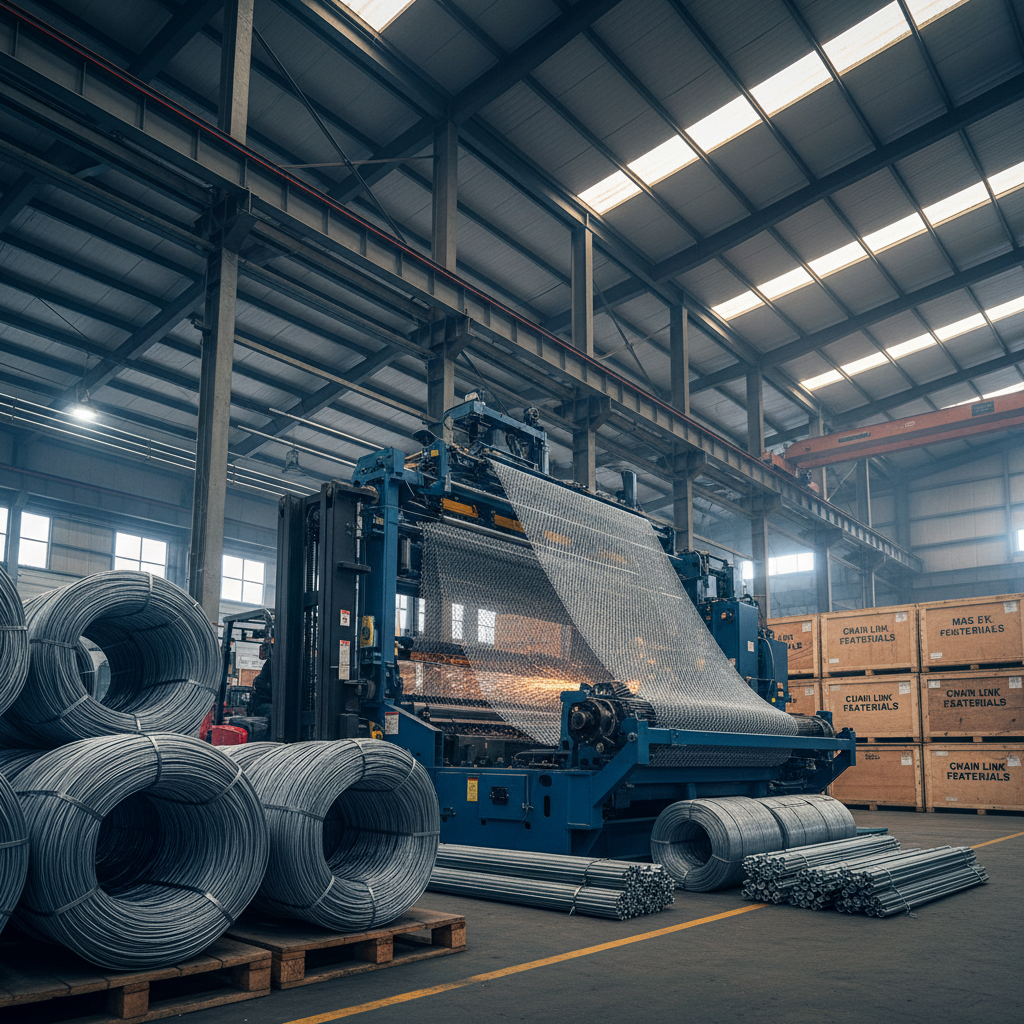
The cost of chain link fencing is primarily driven by the weight of the steel used. Because these products are manufactured from drawn wire, the thickness (gauge) of the wire directly correlates with the amount of raw material required per square metre.
Beyond the steel, the manufacturing process—specifically the weaving of the diamond mesh—adds a labor and energy component. When calculating the chain link fencing price per metre, one must consider whether the price includes only the fabric (the mesh) or the entire system, including tension wires and terminal posts.
Wire gauge is the most significant technical variable. A thicker wire (lower gauge number) provides higher impact resistance and prevents the fence from sagging over time, but it increases the material cost. For industrial applications, high-strength iron wire is often the baseline to ensure the fence can withstand physical pressure.
The mesh aperture size—the dimensions of the diamond openings—also plays a role. Smaller apertures require more wire per metre of fencing, which increases the total weight and the price. Conversely, larger apertures are more cost-effective but offer less security against small intruders or debris.
Coating technology is the final critical factor. Hot-dip galvanization provides a sacrificial zinc layer that protects the steel from oxidation. For environments with high salinity or chemical exposure, an additional PVC coating is applied, which not only extends the lifespan but also allows for aesthetic customization in various colors.
When designing a security perimeter, there is a constant trade-off between the desired rigidity and the allocated budget. While chain link is traditionally flexible, incorporating elements from welded wire mesh design can enhance overall stability.
True value in fencing is measured by the "cost-per-year of service" rather than the initial price per metre; a cheaper, thinly galvanized fence that rusts in five years is significantly more expensive than a PVC-coated system that lasts twenty.
To achieve higher rigidity without exponentially increasing costs, some operators utilize a hybrid approach: using heavier gauge wire for the bottom 60cm of the fence to resist ground-level impact and lighter gauge wire for the upper section.
Different coatings affect both the initial procurement price and the long-term maintenance requirements. Raw steel is the least expensive but impractical for outdoor use, while specialized polymers offer the highest protection.
The following index illustrates the relative cost versus the expected durability of common fencing finishes. This allows procurement officers to visualize the point of diminishing returns when selecting a coating.
In a typical industrial setting, such as a factory perimeter or a public utility substation, the priority is anti-cut capability and rigidity. For these areas, a system utilizing high-strength iron wire with a dense mesh pattern is essential. To further enhance security, these fences are often paired with accessories like post crank arms, barbed wire, or bayonet cages to deter climbing.
Conversely, for sports fields or residential quarters, the focus shifts toward aesthetic design and safety. In these cases, PVC-coated finishes in green or black are preferred to blend with the environment, and the wire gauge may be slightly lower to reduce costs while maintaining sufficient boundary definition.
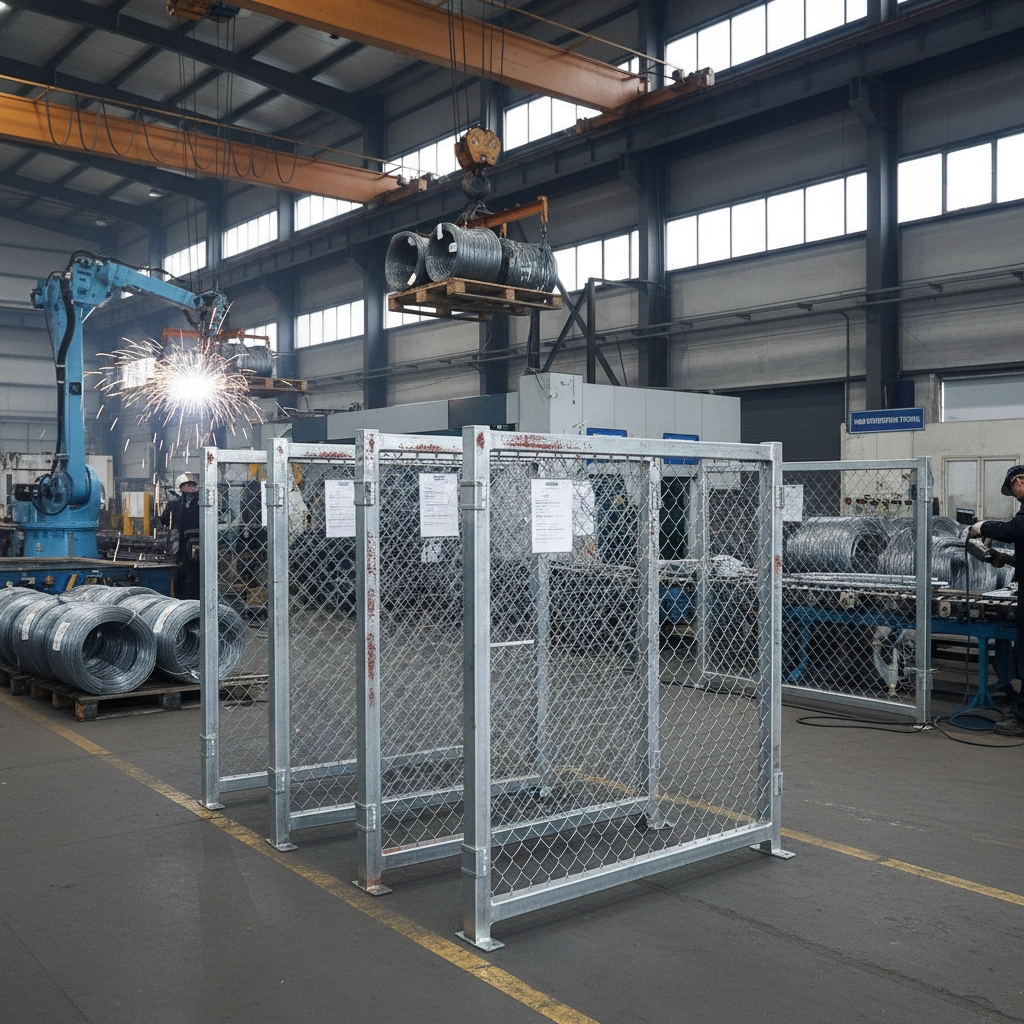
The industry is moving away from basic chain link toward integrated security systems. Modern high-security fences now combine the flexibility of woven mesh with the rigidity of welded panels. For instance, utilizing welded wire mesh fence panels—welded with high-strength wire up to Φ6.15 after treatment—provides a significantly higher anti-cut function than traditional woven mesh.
Innovation is also evident in the fastening systems. The shift from simple ties to stainless steel anti-theft screws or broken bolts ensures that the panels cannot be easily demolished or removed by unauthorized personnel. This transition reflects a change in user expectations: fences are no longer just boundaries, but active deterrents.
Furthermore, the integration of security accessories, such as integrated crank arms and specialized top-pattern designs, has enhanced the anti-climb capacity of these systems, making them suitable for high-security areas like airports and government buildings.
Selecting the right fencing system requires a systematic evaluation of the environment, the threat level, and the desired lifespan. Procurement should not be based on the lowest quote per metre, but on a weighted analysis of technical specifications.
When comparing different wire products, it is essential to verify the treatment process. For example, ensuring that the PVC coating is applied over a galvanized core rather than raw steel is the difference between a fence that lasts for decades and one that fails within a few years.
The following table provides a comparative framework for selecting between standard chain link and high-security welded options based on typical project requirements.
| Evaluation Factor | Standard Chain Link | Welded Wire Panel | Security Priority |
|---|---|---|---|
| Anti-Cut Capacity | Moderate | High (Φ6.15 wire) | Critical |
| Installation Speed | Fast | Moderate | Secondary |
| Structural Rigidity | Flexible | Rigid | High |
| Corrosion Resistance | Dependent on Zinc | High (PVC/Galv) | High |
| Anti-Climb Feature | Low (unless added) | High (dense mesh) | Critical |
| Long-term Value | Economical | High Investment | Lifecycle-based |
For residential boundaries, a medium gauge wire usually offers the best balance. It provides enough stability to prevent significant sagging without the high cost of industrial-grade high-strength wire. However, the choice should depend on whether the fence is intended for pet containment or actual security.
PVC coating increases the initial price due to the additional material and the coating process. However, it significantly reduces long-term maintenance costs by protecting the inner galvanized steel from moisture and UV rays, effectively extending the product's service life in harsh climates.
Yes, especially in areas requiring high rigidity and anti-cut properties. Welded panels, such as those using Φ6.15 iron wire, offer superior strength and a more professional aesthetic, although they typically require a more precise installation process compared to the flexible nature of chain link.
The primary driver is the global price of raw steel. Secondary factors include the cost of zinc for galvanization and the energy costs associated with the drawing and weaving processes. Large-scale orders can often mitigate these fluctuations through bulk pricing agreements.
Quality is determined by the zinc coating thickness. Hot-dip galvanizing is generally superior to electro-galvanizing as it creates a thicker, more durable layer. Checking for a consistent, smooth finish without "white rust" or peeling is a key indicator of a professional treatment process.
For high-security needs, the focus should be on the termination points and the top of the fence. Post crank arms with barbed wire or bayonet cages are critical deterrents. Additionally, using stainless steel anti-theft screws for panel connections prevents the fence from being dismantled.
Determining the chain link fencing price per metre is a starting point, not a destination. The real value of a perimeter system lies in the intersection of material grade, coating durability, and the security features integrated into the design.
Whether selecting a standard galvanized mesh for a residential project or a high-strength PVC-coated welded system for an industrial facility, focusing on technical specifications over the lowest initial bid ensures a secure, long-lasting investment that minimizes future replacement costs.