TEL:
+86-13102802206
TEL:
+86-13102802206
 Email:
fencenetting@china.com
Email:
fencenetting@china.com
 Language
TEL:
+86-13102802206
Email:
fencenetting@china.com
Language
Language
TEL:
+86-13102802206
Email:
fencenetting@china.com
Language


When it comes to welding, selecting the right wire is crucial for achieving strong, durable, and corrosion-resistant welds. 035 stainless steel welding wire is a popular choice for various applications, offering excellent performance and versatility. This article provides an in-depth look at this welding wire, covering its characteristics, applications, advantages, and important considerations for optimal results. Choosing the correct welding wire significantly impacts the quality and longevity of your projects. We’ll explore why TY Wire Mesh is a trusted supplier for premium welding solutions.
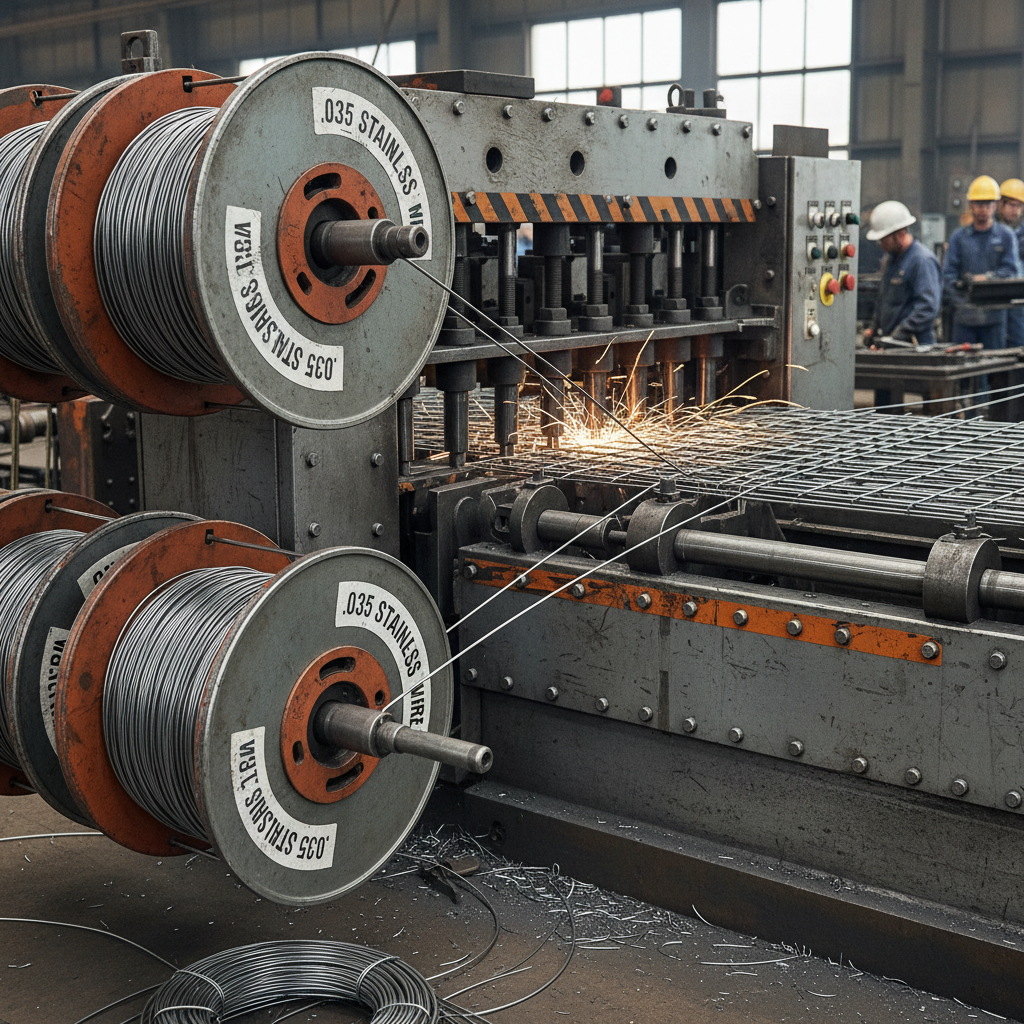
035 refers to the wire diameter, 0.035 inches, making it a smaller gauge wire commonly used in MIG (Metal Inert Gas) and TIG (Tungsten Inert Gas) welding processes. Stainless steel welding wire, in this case, is an alloy containing iron, chromium, and nickel, providing exceptional resistance to corrosion, oxidation, and high temperatures. The specific alloy typically falls within the 304 or 304L stainless steel family, known for their excellent weldability and versatility. These wires are available in various forms, including solid wire and flux-cored wire, each suited for different applications and welding techniques. The addition of molybdenum further enhances corrosion resistance in certain 304L variants.
Key Highlights: Excellent corrosion resistance, versatile for various applications, commonly used in MIG and TIG welding, available in solid and flux-cored forms.
This welding wire finds extensive use in numerous industries. Food processing equipment benefits from its sanitary properties and resistance to corrosion from food acids. In the automotive industry, it’s used for exhaust systems and structural components requiring heat and corrosion resistance. The architectural field employs it for railings, decorative elements, and structural supports. Pharmaceutical and chemical industries utilize its high purity and resistance to aggressive chemicals. Furthermore, it's common in general fabrication, repair work, and DIY projects where a durable, corrosion-resistant weld is required. The versatility of TY Wire Mesh’s 035 stainless wire makes it ideal for diverse projects.
Common Application Areas:
• Food processing equipment
• Automotive exhaust systems
• Architectural railings and supports
• Pharmaceutical and chemical processing
Two primary types of 035 stainless steel welding wire are commonly used: solid wire (ER308L/ER309L) and flux-cored wire (E71T-1/E71T-11). Solid wire offers cleaner welds, better precision, and is ideal for applications requiring high aesthetic quality. Flux-cored wire, on the other hand, provides higher deposition rates and is more forgiving of dirty or rusty base metals. Here’s a table outlining key specifications:
Utilizing 035 stainless steel welding wire offers several benefits. Its superior corrosion resistance ensures weld longevity in harsh environments. The good weldability minimizes defects and ensures strong joints. Its compatibility with various welding techniques, including MIG and TIG, provides flexibility in application. The lower heat input compared to thicker wires reduces distortion in thin materials. The availability of both solid and flux-cored options allows you to choose the best wire for your specific needs and skill level. TY Wire Mesh offers consistent quality and performance, delivering reliable results every time.
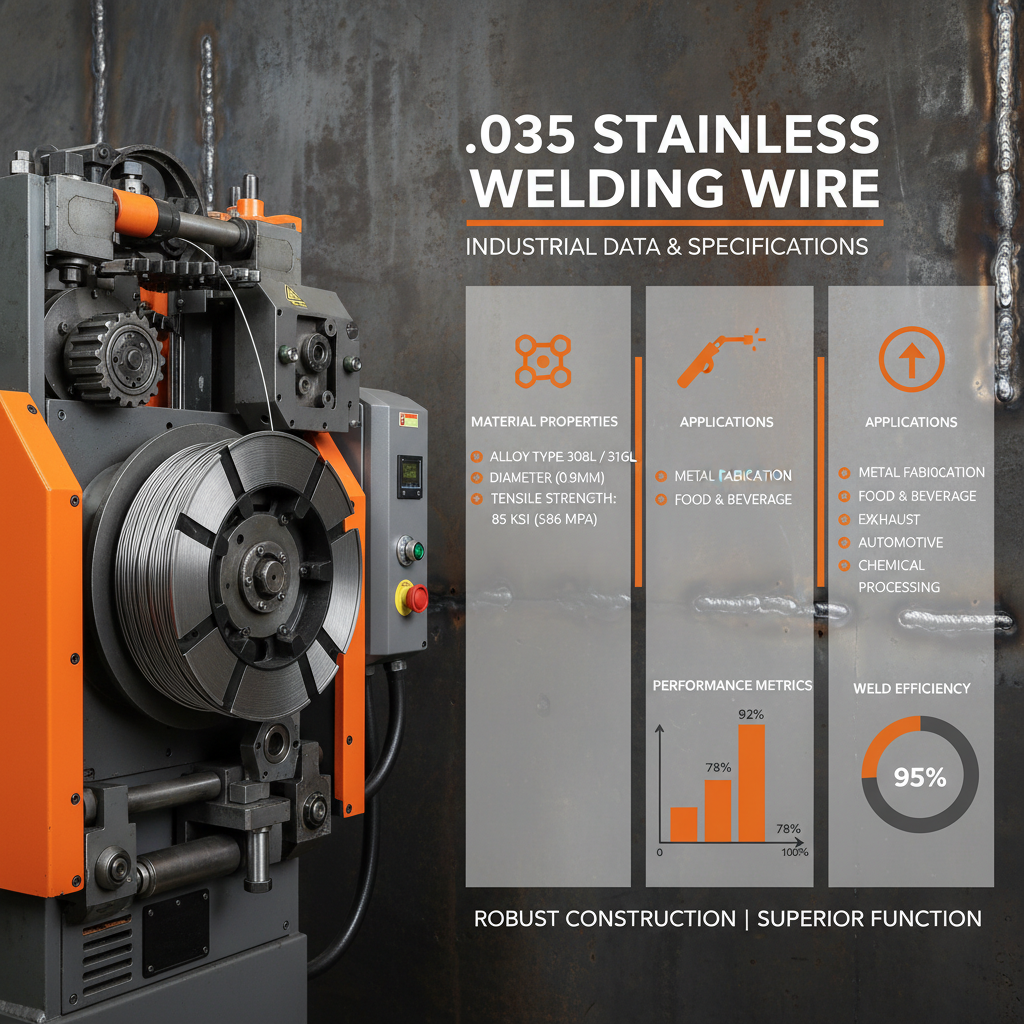
Selecting a reputable supplier like TY Wire Mesh is paramount. Ensure the wire meets industry standards and has consistent quality. Proper welding parameters are also crucial. Voltage, amperage, and wire feed speed should be adjusted based on the specific alloy, material thickness, and welding position. Using the correct shielding gas (typically Argon or Argon/CO2 mixtures) is vital for protecting the weld pool from contamination. Always refer to the wire manufacturer’s recommendations and follow proper safety procedures during welding.
Investing in high-quality 035 stainless steel welding wire from a trusted supplier like TY Wire Mesh is essential for achieving durable, corrosion-resistant welds. Understanding the different types, specifications, and proper welding parameters will ensure optimal results for your projects. Don’t compromise on quality – choose TY Wire Mesh for reliable performance and lasting welds.
For most 035 stainless steel welding applications, an Argon-based shielding gas is recommended. Pure Argon provides excellent protection for welds requiring high purity and corrosion resistance. An Argon/CO2 mix (typically 98% Argon / 2% CO2) can be used to improve weld penetration and arc stability, particularly for thicker materials. The specific gas mixture should be chosen based on the alloy being welded and the desired weld characteristics. Always consult the wire manufacturer's recommendations for the optimal shielding gas.
Yes, 035 stainless steel welding wire is well-suited for welding thin gauge metals due to its lower heat input compared to larger diameter wires. This helps minimize distortion and burn-through. However, careful control of welding parameters (voltage, amperage, and wire feed speed) is crucial to prevent overheating and ensure a quality weld. Using a pulsed MIG welding technique can also provide better control and reduce heat input when working with thin materials.
ER308L is a general-purpose stainless steel welding wire commonly used for welding 304 and 304L stainless steels. ER309L, on the other hand, is used for welding dissimilar metals, such as stainless steel to carbon steel, or for welding heavier sections of stainless steel where higher dilution is expected. ER309L has a higher alloy content (higher chromium and nickel) providing increased weld strength and corrosion resistance in these applications. Choosing the correct wire depends on the specific base metal composition and welding requirements.
Proper storage is crucial to prevent contamination and ensure the wire's performance. Store the wire in a dry, clean environment, protected from moisture, dust, and direct sunlight. Ideally, keep it sealed in its original packaging until ready to use. If the wire has been exposed to moisture, it should be baked according to the manufacturer's instructions to remove any absorbed water before welding. Regular inspection of the wire for signs of rust or contamination is also recommended.