TEL:
+86-13102802206
TEL:
+86-13102802206
 Email:
fencenetting@china.com
Email:
fencenetting@china.com
 Language
TEL:
+86-13102802206
Email:
fencenetting@china.com
Language
Language
TEL:
+86-13102802206
Email:
fencenetting@china.com
Language


3/8 stainless steel cable is a versatile and robust material widely used across various industries due to its high strength, corrosion resistance, and durability. From architectural applications to marine environments and industrial settings, this cable offers a reliable solution for numerous demanding projects. This article will delve into the properties, applications, advantages, and considerations when choosing 3/8 stainless steel cable, providing a comprehensive guide for professionals and enthusiasts alike. Understanding its capabilities is key to maximizing its utility in your next project.
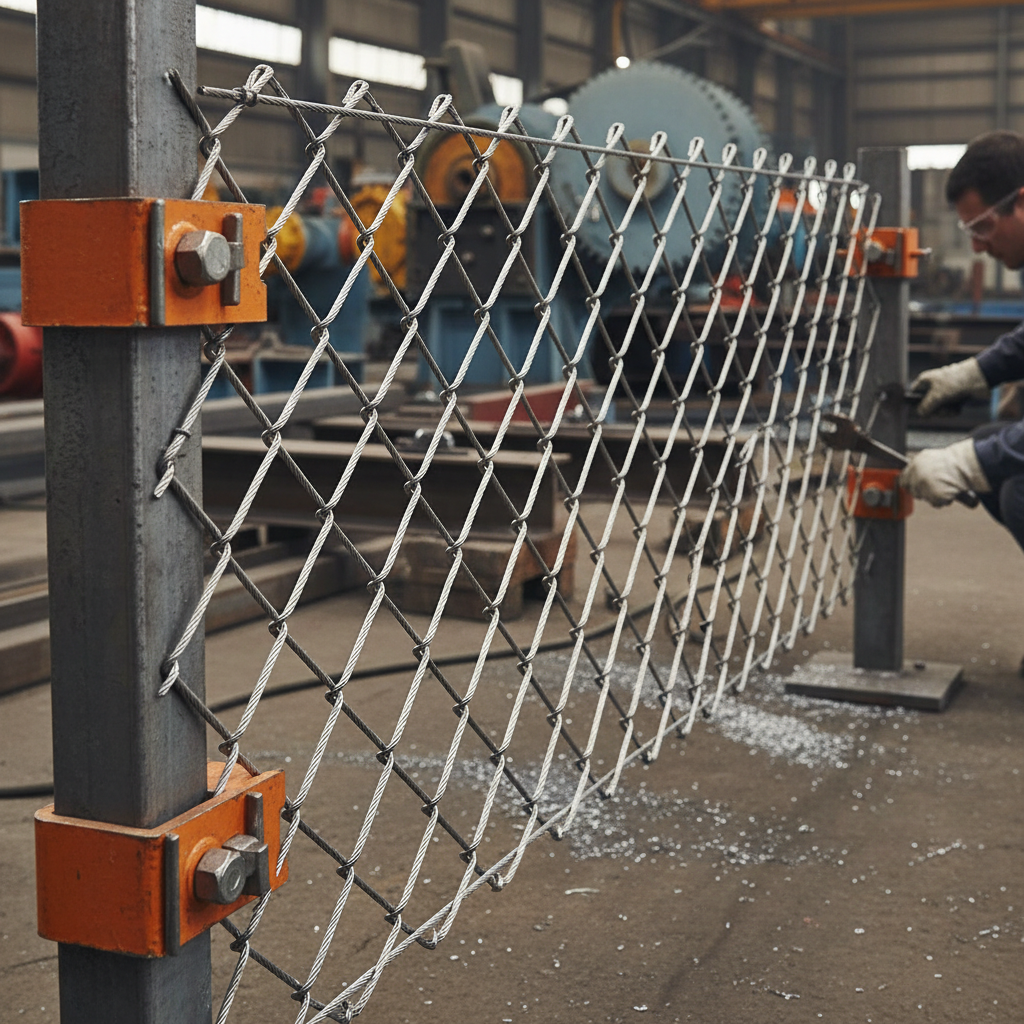
The core strength of 3/8 stainless steel cable lies in its material composition – typically 304 or 316 stainless steel. 304 stainless steel is known for its excellent corrosion resistance in a wide range of atmospheric environments and is commonly used in general-purpose applications. 316 stainless steel, with the addition of molybdenum, provides enhanced resistance to chloride corrosion, making it ideal for marine and coastal environments. The “3/8” designation refers to the cable’s diameter in inches. This size offers a good balance between flexibility and strength. The cable is constructed by stranding multiple wires together, providing increased tensile strength and resistance to breakage. TY Wire Mesh offers a range of high-quality 3/8 stainless steel cables suitable for diverse applications.
Key Highlights: Offers high tensile strength, excellent corrosion resistance, and is suitable for both indoor and outdoor applications. The 3/8 diameter provides a balance of flexibility and strength.
The versatility of 3/8 stainless steel cable leads to its widespread use in numerous applications. These include architectural railing systems, providing secure and aesthetically pleasing barriers. Marine rigging, benefitting from the cable's corrosion resistance in saltwater environments. Industrial applications, such as lifting and hoisting, requiring high strength and reliability. Security fencing, offering a durable and tamper-resistant barrier. Clotheslines, offering longevity and resistance to weathering. Artwork and sculptures, where the cable's strength and flexibility allow for creative designs. Explore the diverse range of stainless steel cables available at TY Wire Mesh.
Application Examples:
• Architectural Railing Systems
• Marine Rigging & Support
• Industrial Lifting & Hoisting
• Security Fencing
Choosing between 304 and 316 stainless steel cable depends largely on the intended application and the environmental conditions. 304 stainless steel is more cost-effective and provides excellent resistance to corrosion in most general environments. However, in environments with high chloride exposure, such as coastal areas or industrial settings with de-icing salts, 316 stainless steel is the preferred choice due to its superior corrosion resistance. The addition of molybdenum in 316 provides enhanced protection against pitting and crevice corrosion.
Beyond the grade of stainless steel, several factors influence cable selection. The working load limit (WLL) is critical; it represents the maximum load the cable can safely bear. Consider the cable’s construction – 7x7 strand construction offers greater flexibility, while 6x19 provides higher strength. The cable's diameter and breaking strength must align with the application's requirements. Proper fittings and hardware are crucial for ensuring a secure and reliable connection. Finally, always consult with a qualified engineer or professional to determine the appropriate cable for your specific project.
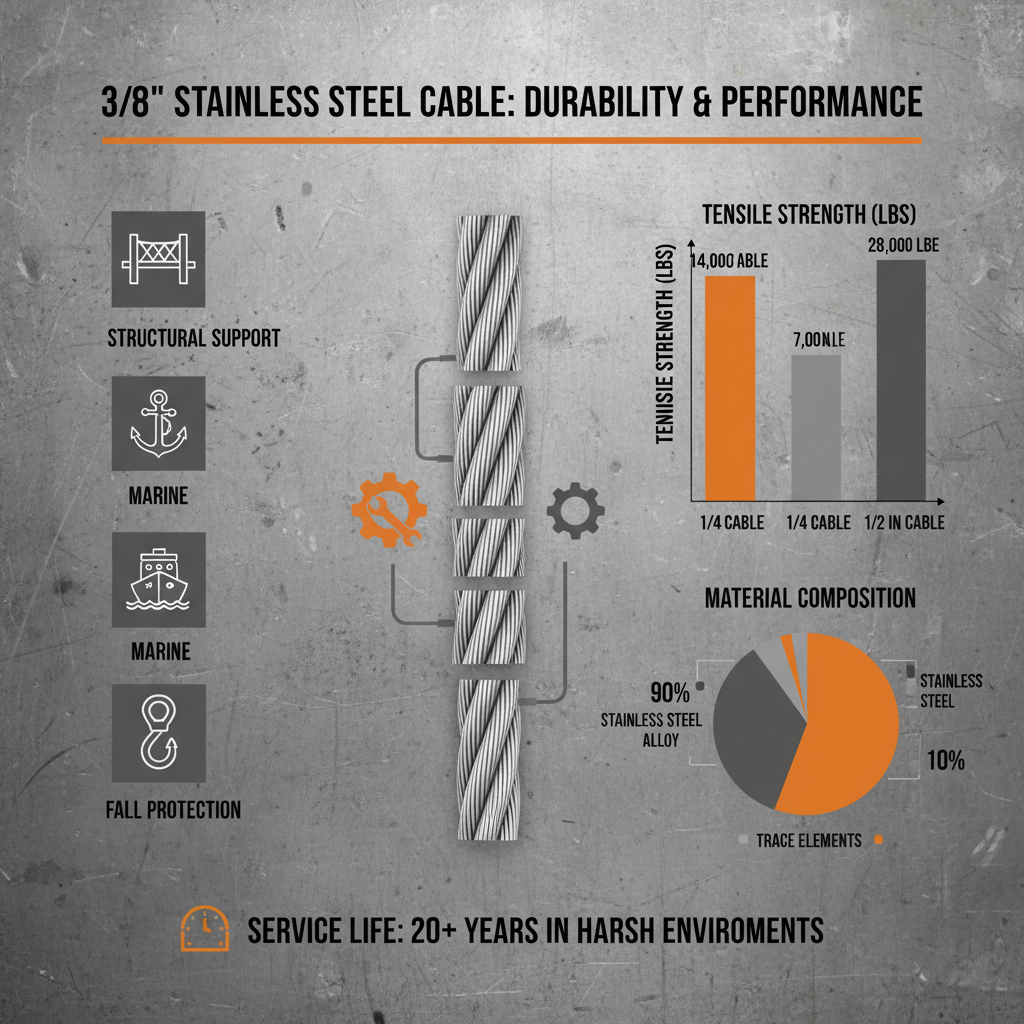
By carefully considering the factors discussed – grade of stainless steel, working load limit, cable construction, and proper fittings – you can make an informed decision and achieve optimal results. TY Wire Mesh offers a wide selection of high-quality 3/8 stainless steel cables to meet your specific needs.
The breaking strength of 3/8 stainless steel cable varies depending on the grade of stainless steel (304 or 316) and the cable's construction. Generally, a 3/8 inch cable can have a breaking strength ranging from 6,000 lbs to over 10,000 lbs. It’s crucial to always check the manufacturer’s specifications for the exact breaking strength of the cable you are using, and never exceed the working load limit, which is significantly lower than the breaking strength. The working load limit is a safety factor that ensures the cable operates safely under normal conditions.
Cutting stainless steel cable requires specialized tools to prevent fraying and damage. Using a standard wire cutter is not recommended. A cable cutter specifically designed for stainless steel cable is essential. Alternatively, an abrasive chop saw with a stainless steel cutting disc can be used. After cutting, it’s crucial to properly terminate the cable ends with fittings like swage sleeves, thimbles, and cable clamps to maintain its strength and integrity. Always wear appropriate safety gear, including eye protection and gloves, when cutting stainless steel cable.
Stainless steel cable offers several advantages over other materials like galvanized steel or rope. Its superior corrosion resistance makes it ideal for outdoor and marine applications. It has a much higher strength-to-weight ratio than rope, allowing for smaller cable diameters to support the same load. Stainless steel is also more resistant to abrasion and UV degradation than synthetic materials. Finally, its sleek appearance makes it a preferred choice for architectural applications where aesthetics are important.
Proper storage is crucial for maintaining the longevity of stainless steel cable. Store the cable in a dry, well-ventilated area, away from direct sunlight and exposure to harsh chemicals or chlorides. If possible, coil the cable loosely to prevent kinks and bending. For long-term storage, consider applying a corrosion inhibitor to the cable's surface. Avoid storing the cable in contact with dissimilar metals, as this can accelerate corrosion.