TEL:
+86-13102802206
TEL:
+86-13102802206
 Email:
fencenetting@china.com
Email:
fencenetting@china.com
 Language
TEL:
+86-13102802206
Email:
fencenetting@china.com
Language
Language
TEL:
+86-13102802206
Email:
fencenetting@china.com
Language


304 stainless steel mesh is a versatile material widely used across numerous industries, from filtration and screening to security and architectural applications. Its corrosion resistance, durability, and ease of fabrication make it a preferred choice for demanding environments. This article provides an in-depth look at the properties, applications, and considerations when choosing 304 stainless steel mesh, ensuring you make the right selection for your specific needs. Whether you're in manufacturing, agriculture, or construction, understanding this material is key to achieving optimal results.
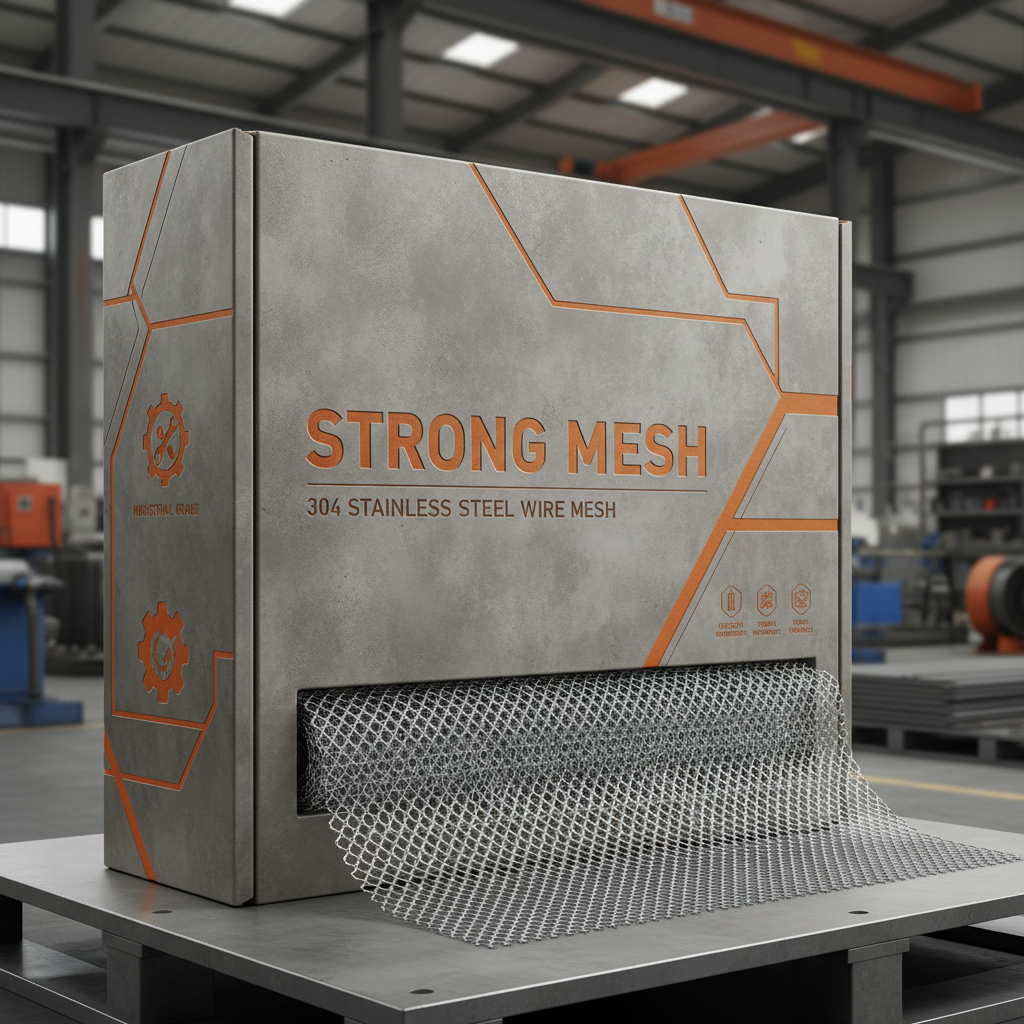
304 stainless steel is an austenitic stainless steel alloy containing 18% chromium and 8% nickel. This composition provides excellent corrosion resistance, particularly against oxidation and rust. When woven into a mesh, the resulting material retains these properties while offering permeability and structural integrity. 304 stainless steel mesh is commonly available in various weaves – plain, twill, dutch, reverse dutch – each suited to different applications based on desired flow rates, particle retention, and strength. The wire diameter and aperture size (the space between the wires) are also crucial factors in determining the mesh's performance.
Key Highlights: Offers exceptional corrosion resistance, durability, and versatility, making it ideal for a wide range of industrial and commercial applications.
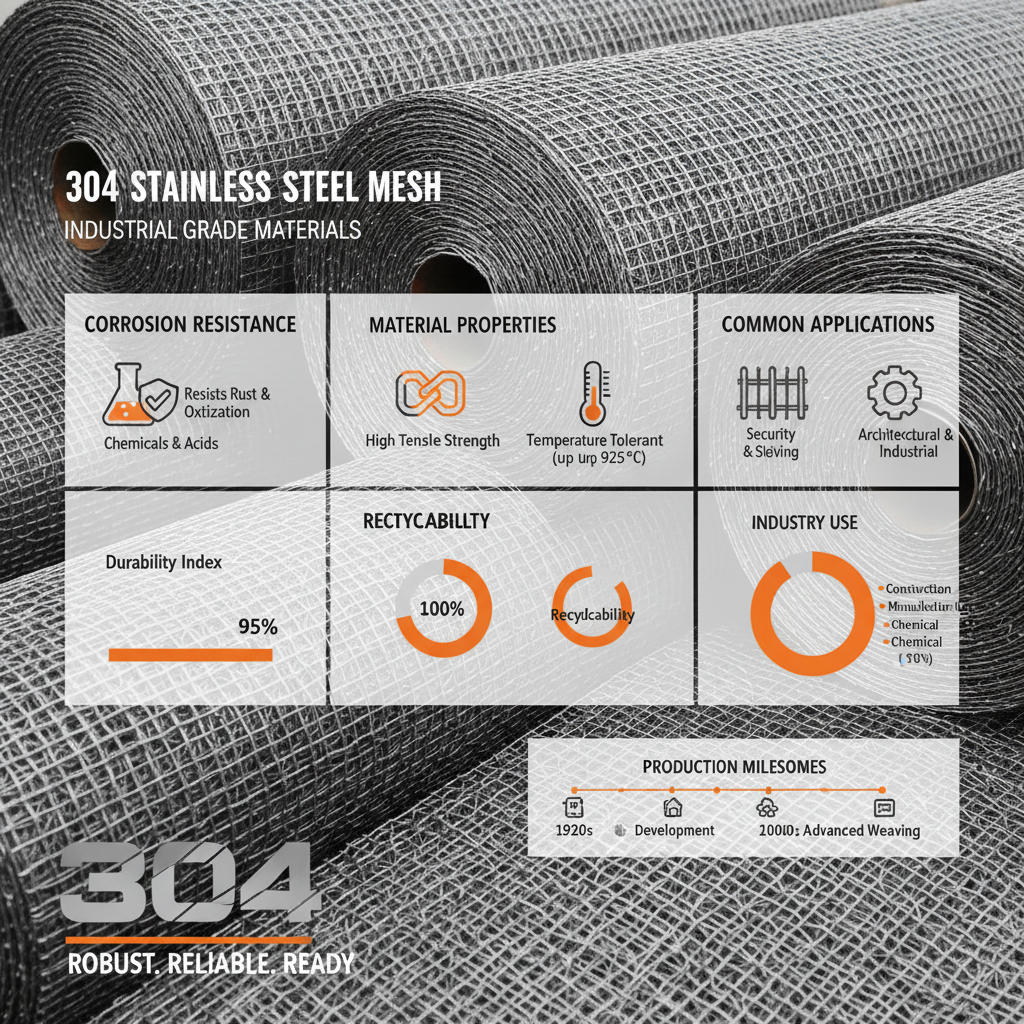
The remarkable properties of 304 stainless steel mesh contribute to its widespread adoption. These include high tensile strength, allowing it to withstand significant loads; excellent formability, enabling it to be easily cut, shaped, and welded; and exceptional resistance to a wide range of corrosive environments. Importantly, it's also hygienic and easy to clean, making it suitable for food and pharmaceutical applications. These characteristics translate to long-term reliability and reduced maintenance costs. Choosing the right mesh specification is vital to leverage these benefits fully.
Key Properties at a Glance:
• High tensile strength
• Excellent corrosion resistance
• Good formability
• Hygienic and easy to clean
The applications of 304 stainless steel mesh are remarkably diverse. In filtration, it’s used for separating solids from liquids or gases in various industries like food processing, pharmaceuticals, and chemicals. It's employed in security applications as fencing or protective screens, providing robust barriers. Architectural projects utilize it for decorative facades, railings, and sun shading. Other common applications include insect screening, speaker grills, and even in the production of tea bags. Explore TY Wire Mesh's range of applications and find a solution tailored to your needs.
Selecting the appropriate 304 stainless steel mesh requires careful consideration of several factors. The intended application dictates the required mesh count (number of openings per inch), aperture size, wire diameter, and weave type. For instance, finer meshes are needed for filtering very small particles, while coarser meshes are sufficient for security applications. The environment in which the mesh will be used is also crucial. While 304 stainless steel offers excellent corrosion resistance, more corrosive environments might require a higher grade like 316 stainless steel. Working with a knowledgeable supplier like TY Wire Mesh can streamline this process.
While both 304 and 316 stainless steels offer excellent corrosion resistance, 316 contains molybdenum, which significantly enhances its resistance to chloride corrosion. This makes 316 stainless steel mesh a better choice for marine environments, chemical processing plants, and other applications where exposure to chlorides is high. 304 stainless steel remains suitable for a vast range of applications where chloride exposure is minimal. The cost of 316 is typically higher than 304, so selecting the appropriate grade based on environmental conditions is critical for cost-effectiveness.
Choosing the right 304 stainless steel mesh requires careful consideration of your specific application, environmental conditions, and performance requirements. By understanding the properties, applications, and differences between grades like 304 and 316, you can ensure you select a material that provides long-lasting durability, reliability, and cost-effectiveness.
The most common weave types include plain weave (simple over-under pattern), twill weave (diagonal pattern for higher density), dutch weave (alternating over/under for high flow rates), and reverse dutch weave (more wires in the warp direction for finer filtration). The choice of weave depends on the desired filtration efficiency, flow rate, and structural integrity. Plain weave is versatile and cost-effective, while twill and dutch weaves offer specialized performance characteristics.
Yes, 304 stainless steel mesh can be welded using various techniques, including spot welding, seam welding, and resistance welding. However, the welding process can potentially affect the corrosion resistance of the mesh in the weld area. Proper welding procedures and post-weld treatment are crucial to maintain the material's integrity. It’s important to use appropriate welding rods and techniques designed for stainless steel.
The correct mesh count depends on the size of the particles you need to retain or filter. A higher mesh count means smaller openings and finer filtration. Consider the particle size distribution and the desired filtration efficiency. If you’re unsure, it’s best to consult with a mesh specialist to determine the optimal mesh count for your specific application. TY Wire Mesh offers expert guidance in selecting the right mesh count.
Compared to materials like carbon steel or aluminum, 304 stainless steel mesh offers superior corrosion resistance, making it ideal for harsh environments. It also provides higher strength and durability, reducing the need for frequent replacements. Its hygienic properties make it suitable for food and pharmaceutical applications, where cleanliness is paramount. While it may be more expensive than some other materials, the long-term benefits and reduced maintenance costs often outweigh the initial investment.