TEL:
+86-13102802206
TEL:
+86-13102802206
 Email:
fencenetting@china.com
Email:
fencenetting@china.com
 Language
TEL:
+86-13102802206
Email:
fencenetting@china.com
Language
Language
TEL:
+86-13102802206
Email:
fencenetting@china.com
Language


In the dynamic landscape of civil engineering and environmental construction, the strategic demand for resilient, sustainable, and adaptable earth retention solutions is paramount. Among the most innovative and widely adopted methods, the gabion basket retaining wall stands out as a superior choice, integrating functionality with ecological benefits. These structures, fundamentally robust wire mesh cages filled with natural stone, are engineered to provide exceptional stability, superior drainage, and impressive flexibility. Their versatility makes them indispensable across a broad spectrum of applications, from critical erosion control initiatives along vulnerable waterways to the creation of stable, multi-tiered landscapes and effective sound attenuation barriers in densely populated urban environments. A key technical advantage of a gabion wall lies in its inherent flexibility, allowing it to conform to ground settlement and seismic movements without compromising structural integrity—a critical distinction from rigid retaining systems which are prone to cracking under such conditions. Furthermore, the permeable nature of a gabion retaining wall facilitates efficient water drainage, effectively mitigating hydrostatic pressure buildup behind the wall, a common cause of failure in traditional solid concrete structures. This characteristic contributes significantly to their long-term stability and reduced maintenance requirements. The industry is currently experiencing a profound shift towards green infrastructure, prioritizing solutions that seamlessly integrate with and enhance the natural environment. The gabion basket retaining wall perfectly aligns with this progressive trend, offering both robust engineering resilience and an organic, adaptable aesthetic that matures gracefully as natural vegetation colonizes the voids within the stone infill. This ecological compatibility and aesthetic flexibility solidify their position as a preferred choice for engineers, contractors, and landscape architects seeking durable, economically viable, and environmentally responsible solutions for both expansive public infrastructure projects and nuanced private land developments. The growing global awareness of climate change impacts, including more frequent extreme weather events and increased erosion risks, further amplifies the critical relevance and accelerating adoption of gabion wall systems, establishing them as a cornerstone in the development of truly resilient and sustainable infrastructure worldwide.
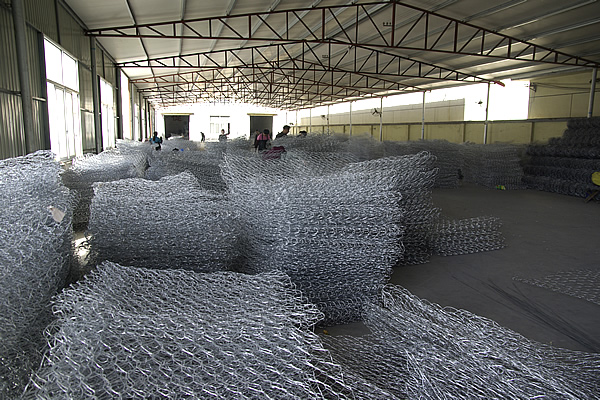
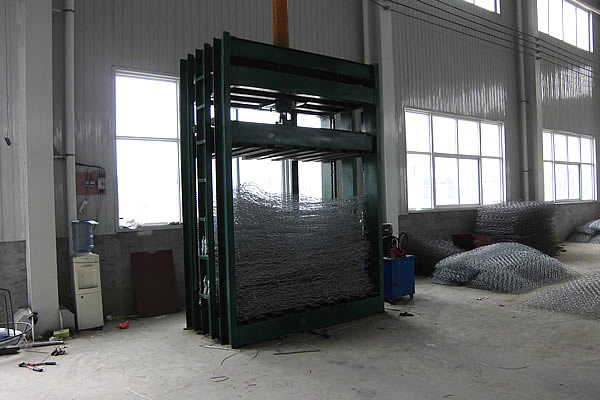
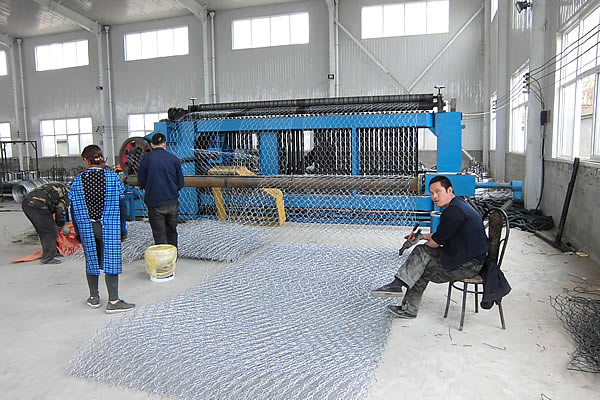
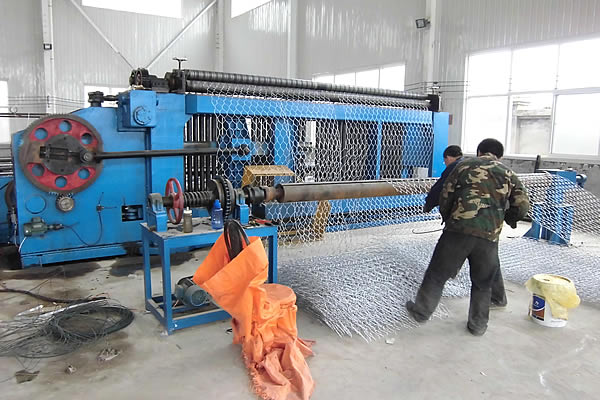
The manufacturing of high-performance gabion wall baskets is a sophisticated and highly controlled process, designed to guarantee the structural integrity, long-term durability, and consistent quality essential for demanding civil engineering applications. The journey begins with the rigorous selection of premium raw materials, primarily high-tensile, low-carbon steel wire. This foundational material undergoes comprehensive testing to verify its mechanical properties, including precise measurements of tensile strength, elongation, and the adherence of its zinc coating, all in strict compliance with international standards such as ASTM A975/A975M for gabion wire mesh and ISO 9001 for overarching quality management systems. For enhanced corrosion resistance, the wire is typically hot-dip galvanized, achieving a zinc coating mass exceeding 245 g/m², ensuring robust protection against environmental degradation. For projects in aggressive environments, such as coastal regions or industrial sites with acidic soils, a further PVC (Polyvinyl Chloride) coating is applied over the galvanized wire, significantly extending the service life of the gabion basket retaining wall beyond 50 years under optimal conditions. The primary fabrication processes involve either double-twisted hexagonal mesh weaving or welded wire mesh manufacturing. Double-twisted mesh is celebrated for its exceptional flexibility and its "non-unraveling" property, where a single wire break does not compromise the entire mesh, making it highly resilient to ground movement and differential settlement. Conversely, welded mesh offers a more rigid, aesthetically uniform structure, often favored for architectural gabion wall design or where a precise, straight wall face is desired. Automated, precision machinery meticulously weaves or welds the wire into the specified mesh patterns and dimensions for the gabion wall cages. This automation ensures unparalleled uniformity in mesh aperture (e.g., 60x80mm, 80x100mm for hexagonal; 50x50mm, 75x75mm for welded) and overall basket sizing, which is critical for predictable structural performance and ease of site assembly. Quality control is an intensive, multi-stage process integrated throughout the manufacturing line, featuring continuous inline inspections for mesh integrity, precise wire diameter consistency, uniform coating thickness (verified through advanced techniques like X-ray fluorescence), and meticulous dimensional accuracy of every panel and finished basket. Upon completion, gabion units are efficiently flattened and bundled for cost-effective transportation to construction sites. These stringent manufacturing standards ensure that our gabions are optimally suited for a diverse range of critical industries, including infrastructure development (road and bridge abutment protection), hydraulic engineering (river and canal bank stabilization, scour protection), land remediation (slope reinforcement, landslide prevention), and urban planning (retaining walls, noise barriers, landscape features). The inherent design allows for significant material and construction cost savings compared to traditional concrete structures, and its exceptional drainage properties actively prevent waterlogging, thereby reducing long-term maintenance needs and profoundly contributing to overall project sustainability and longevity. This commitment to precision engineering underpins the reliability of every gabion basket retaining wall solution we provide.
A thorough understanding of the precise technical specifications is absolutely critical for the successful execution of any gabion retaining wall project. This knowledge ensures that the constructed structure not only meets but often exceeds specific load-bearing requirements, withstands anticipated environmental conditions, and achieves desired aesthetic outcomes. The structural and functional performance of a gabion wall system is inherently dependent on the quality and detailed characteristics of each of its individual components. The wire diameter, typically ranging from 2.0mm to 4.0mm, directly dictates the tensile strength and overall resilience of the mesh; a larger diameter confers greater structural rigidity and enhanced resistance to deformation under various operational loads. Mesh aperture, which defines the exact size of the individual openings within the wire mesh, is another paramount parameter, commonly specified in dimensions such as 60x80mm, 80x100mm, and 100x120mm for hexagonal double-twisted mesh, and 50x50mm or 75x75mm for welded wire mesh. This aperture must be meticulously selected to be smaller than the minimum dimension of the chosen stone infill material, thereby preventing any spillage while simultaneously ensuring optimal and unimpeded water drainage. The selection of coatings is equally vital for robust corrosion protection; standard options include heavy galvanized finishes (with a zinc coating mass typically exceeding 245 g/m²), Galfan (a sophisticated zinc-aluminum alloy offering superior corrosion resistance and potentially tripling the operational life of standard galvanization), and PVC coating (applied meticulously over galvanized wire, providing exceptional resistance to abrasion, chemical exposure, and UV radiation, which is particularly advantageous in harsh or highly aggressive environments). The physical dimensions of the gabion wall baskets themselves are standardized to streamline both design and construction processes, yet they offer sufficient variability to accommodate an extensive range of diverse applications. Common sizes typically include lengths of 2m, 3m, or 4m; standard widths of 1m; and heights of 0.5m or 1m, although bespoke custom sizes are readily available to precisely meet unique project-specific demands for a particular gabion wall design. For instance, a typical gabion basket retaining wall designed for slope stabilization might efficiently utilize baskets measuring 2m x 1m x 1m (Length x Width x Height). Furthermore, the type, physical properties, and gradation of the stone infill material are also of paramount importance, directly influencing the overall permeability, structural density, and visual appeal of the completed structure. The stones selected must be hard, highly durable, non-friable, non-frost susceptible, and appropriately sized to be securely retained within the wire mesh, ensuring maximum interlocking and stability. These comprehensive and detailed specifications collectively ensure that each individual gabion basket contributes effectively to the overall stability, longevity, and structural integrity of the entire retaining system, providing an exceptionally robust and reliable engineering solution capable of withstanding the rigors of its intended environment for decades.
| Parameter | Description | Typical Values/Standards |
|---|---|---|
| Wire Material | Low Carbon Steel Wire for mesh and lacing wire. | ASTM A641, EN 10223-3 |
| Wire Diameter (Mesh) | Gauge of wire forming the mesh panels. | 2.2mm - 4.0mm (standard range). |
| Wire Diameter (Selvedge) | Thicker wire used at panel edges for reinforcement. | Often 0.5mm - 1.0mm thicker than mesh wire. |
| Mesh Type | Weave or weld pattern configuration. | Double Twisted Hexagonal (Type 60, 80, 100); Welded Mesh (Square/Rectangular). |
| Mesh Aperture | Size of mesh openings (e.g., 80x100mm). | 60x80mm, 80x100mm, 100x120mm (Hex); 50x50mm, 75x75mm (Welded). |
| Corrosion Protection | Coating applied for enhanced durability and lifespan. | Hot-Dip Galvanized (ASTM A90/A641), Galfan (Zinc-Aluminum), PVC Coating (ASTM A975). |
| Typical Dimensions (LxWxH) | Standard basket dimensions for various applications. | 2x1x1m, 3x1x1m, 4x1x1m, 2x1x0.5m etc. (Custom sizes available upon request). |
| Infill Material | Characteristics of the stone used to fill the baskets. | Durable, non-friable, well-graded; size generally 1.5-2x mesh aperture. |
The pervasive adoption of gabion retaining wall systems across diverse engineering disciplines is primarily driven by a compelling array of technical advantages that position them as superior alternatives to conventional rigid structures, such as solid concrete or traditional masonry walls. A fundamental strength lies in their inherent flexibility. Unlike inflexible walls that are susceptible to catastrophic cracking or failure under conditions of differential settlement, expansive soils, or seismic activity, gabions are meticulously engineered to deform elastically without fracture, thereby absorbing ground movements and effectively preserving their structural integrity. This intrinsic resilience renders them exceptionally suitable for construction in areas prone to earthquakes, unstable geological formations, or where future ground instability is anticipated. Their high permeability represents another paramount benefit; the strategically designed voids within the stone infill permit the free passage of water, critically preventing the deleterious buildup of hydrostatic pressure behind the wall. This not only obviates the necessity for intricate and often costly drainage systems typically required for solid walls but also drastically diminishes the risk of wall failure attributable to water pressure, contributing significantly to a prolonged service life and substantially reduced long-term maintenance expenditures. From an ecological standpoint, gabions actively facilitate natural drainage patterns and can be seamlessly integrated into the surrounding ecosystem, encouraging the growth of native vegetation within the stone interstices. This fosters enhanced biodiversity, contributes to natural habitat restoration, and improves the overall aesthetic harmony of the constructed environment. Moreover, these systems are highly sustainable, leveraging readily available, locally sourced aggregate materials, thereby minimizing transportation costs and the carbon footprint associated with construction. Their manufacturing processes are also considerably less energy-intensive when compared to the production of concrete. Furthermore, the construction of a gabion wall is generally less complex, typically demanding less specialized labor and often proving more cost-effective than erecting rigid structures. They require minimal, simplified foundation preparation, can be installed with remarkable speed, and do not necessitate extensive heavy machinery for the infilling process. This translates directly into expedited project timelines and significant reductions in overall construction costs. The modular nature of gabion wall baskets allows for straightforward expansion or modification, and any localized damage can frequently be remedied by replacing individual gabion units rather than requiring the complete demolition and rebuilding of an entire structure. These formidable combined attributes—unparalleled flexibility, superior drainage capabilities, profound environmental compatibility, and compelling cost-efficiency—collectively establish the gabion basket retaining wall as an optimal and preferred choice for astute engineers, developers, and project managers seeking robust, adaptable, and inherently sustainable solutions to their most challenging earth retention and stabilization requirements across a multitude of applications.
The remarkable versatility of gabion walls allows for their deployment across an impressive and ever-expanding spectrum of applications, rendering them indispensable in numerous civil engineering, environmental protection, and architectural design projects globally. In the critically important domain of erosion control and river training, gabions are extensively employed for robust riverbank protection, the construction of durable weirs and drop structures, and the efficient lining of channels. Their substantial mass combined with inherent permeability effectively dissipates the erosive energy of flowing water, actively preventing scour and ensuring the long-term stability of slopes adjacent to waterways. This has proven exceptionally effective in mitigating flood risks and preserving vital riparian habitats. For instance, in a recent large-scale project undertaken within a major river basin in Asia, a meticulously engineered series of terraced gabion basket retaining wall structures successfully arrested and prevented further bank erosion during severe seasonal flood events, thereby safeguarding critical agricultural lands and vital infrastructure. Within transportation infrastructure development, gabions serve as exceptionally robust and reliable retaining walls for critical road and rail embankments, integral bridge abutments, and secure tunnel entrances. Their unique ability to accommodate differential settlement makes them ideally suited for supporting dynamic loads and guaranteeing the long-term stability of essential transport routes, even in challenging geotechnical conditions. A particularly notable case involved the stabilization of a persistently problematic section of a major coastal highway, where a flexible gabion retaining wall system was installed to counter recurring landslide issues, providing a resilient and durable solution that demonstrably withstood subsequent seismic activity and adverse weather. Beyond traditional engineering, gabions are increasingly embraced in commercial and residential landscaping to construct aesthetically pleasing terraced gardens, effective sound barriers, and distinctive decorative features. Their natural stone aesthetic blends harmoniously with diverse natural and urban environments, offering a sustainable and visually appealing alternative to traditional hardscaping materials. For example, a sprawling urban park redevelopment project in a major European city incorporated multi-tiered gabion retaining wall elements not only to manage significant elevation changes but also to function ingeniously as integrated seating areas and elevated green spaces, showcasing their profound multi-functional and aesthetic appeal. Their profound utility in land remediation and comprehensive slope stabilization, particularly in areas characterized by unstable ground or previous disturbance, cannot be overstated. They provide a cost-effective, environmentally sound, and visually appealing method to reinforce unstable slopes, actively prevent landslides, and effectively reclaim previously unusable land for productive development. The successful implementation of a multi-tiered gabion basket retaining wall system within a former quarry site in a densely populated region transformed hazardous, unstable terrain into usable, safe, and ecologically integrated land, underscoring the immense potential of innovative gabion wall design in addressing complex geotechnical and environmental challenges. These widely diverse and consistently successful applications, coupled with continuous positive client feedback and measurable environmental benefits, emphatically underscore the proven efficacy and expanding critical role of gabion systems in modern construction and infrastructure development globally.
The selection of the appropriate manufacturer for your gabion wall cages is a pivotal decision that directly influences the success, longevity, and cost-effectiveness of your entire project. While the market features numerous suppliers of gabion products, discerning buyers and project managers should prioritize manufacturers who unequivocally demonstrate an unwavering commitment to superior quality, strict adherence to relevant international standards, extensive industry experience, and robust, responsive customer support. Key differentiating factors to consider during manufacturer comparison include essential certifications such as ISO 9001 for comprehensive quality management systems and specific product certifications like ASTM or EN standards for wire material, coatings, and manufacturing processes, which collectively guarantee the integrity of the materials and consistency of production. Reputable manufacturers will invariably possess a verifiable track record, often spanning multiple decades, accompanied by an impressive portfolio of successfully completed projects and consistently positive client testimonials that speak to their reliability and expertise. For instance, a detailed comparison between leading suppliers often reveals subtle yet significant differences in crucial attributes such as wire coating thickness uniformity, mesh weave consistency, and the precision of the flat-pack packaging, all of which directly impact the ease of site installation, the structural integrity, and the long-term performance of the gabion basket retaining wall. Customization capabilities represent another crucial aspect, particularly for complex, architecturally unique, or technically demanding projects. A professional and experienced manufacturer of gabion basket retaining wall systems should possess the capabilities to offer meticulously tailor-made solutions that extend far beyond mere standard dimensions. This bespoke service includes the precise fabrication of custom-sized baskets, the application of specialized coatings engineered for extreme environmental conditions (ee.g., highly corrosive industrial sites or persistent saltwater proximity), and expert guidance on selecting the optimal mesh types (welded vs. double-twisted) based on the specific structural performance requirements and aesthetic vision of your comprehensive gabion wall design. For example, some civil engineering projects might necessitate exceptionally narrow gabion units for constrained spaces, while others may require exceptionally large units for the stabilization of massive embankments or major hydraulic structures. Our company, backed by over two decades of specialized expertise in advanced wire mesh manufacturing, takes immense pride in delivering precision-engineered, bespoke gabion solutions that consistently meet and often surpass the most stringent engineering specifications and design challenges. We engage in close, collaborative partnerships with our clients, from the initial conceptualization phase through to the final product delivery, ensuring that every gabion cage is perfectly suited for its intended rigorous application. This dedication is supported by comprehensive internal and third-party testing data, coupled with a steadfast commitment to quality that has deservedly earned us the profound trust of leading construction firms, government agencies, and engineering consultancies across the globe. This deeply consultative approach, seamlessly integrated with our advanced manufacturing capabilities and extensive engineering knowledge, ensures that our clients receive not merely high-quality products, but complete, reliable, and sustainable solutions for their most pressing earth retention and ground stabilization challenges.
A1: The operational lifespan of a gabion retaining wall is primarily determined by the quality and type of its wire coating and the specific environmental conditions it is exposed to. Hot-dip galvanized gabions are engineered to last 25-50 years in typical benign environments. Gabions featuring a Galfan (zinc-aluminum alloy) coating offer significantly enhanced corrosion resistance, often extending their lifespan to well over 75 years. For projects situated in highly aggressive or corrosive environments, such as marine or industrial settings, PVC-coated gabions are strongly recommended, as they can reliably endure for over 100 years. The stone infill material itself is naturally durable and virtually permanent, ensuring the long-term structural stability of the entire system.
A2: Absolutely, gabion walls are widely recognized and highly regarded as exceptionally environmentally friendly solutions in modern construction. They predominantly utilize natural, locally sourced stone infill materials, which significantly reduces both transportation costs and the overall carbon footprint associated with project development. Their inherent permeable nature facilitates natural drainage, minimizing runoff and supporting the vigorous growth of native vegetation within the stone voids. This integration actively contributes to the restoration and enhancement of local biodiversity, seamlessly blending the structure into the natural landscape. This approach stands in stark contrast to traditional concrete walls, which typically possess a substantially higher carbon footprint and often disrupt natural hydrological cycles.
A3: The stone infill material must be carefully selected to ensure the long-term performance and aesthetic appeal of the gabion structure. Ideal infill stones should be inherently hard, highly durable, non-friable (resistant to crumbling), non-frost susceptible (resistant to freeze-thaw cycles), and meticulously well-graded. The size of the stone typically ranges from 100mm to 200mm, or generally 1.5 to 2 times the mesh aperture, to ensure it is securely retained within the gabion wall cages and provides sufficient interlocking density for optimal structural stability. Prioritizing local quarries for stone sourcing is a common and recommended practice to minimize transportation costs, reduce environmental impact, and make gabion solutions highly adaptable and sustainable across diverse regional geological contexts.
At our advanced manufacturing facility, we possess a profound understanding that timely delivery and uncompromising quality are not merely desirable attributes but absolutely critical prerequisites for the successful completion of any construction or engineering project. Our highly optimized and standardized production processes, coupled with a robust and efficient global logistics network, enable us to consistently offer highly competitive delivery cycles for all gabion basket retaining wall systems. Typically, lead times for standard orders range from 2 to 4 weeks, with precise durations depending on the specific volume and any bespoke customization requirements. For projects operating under exceptionally tight deadlines, we are fully equipped to arrange expedited manufacturing schedules and accelerated shipping options to ensure that even the most demanding timelines are met without compromising product integrity. Each and every batch of our gabion wall baskets undergoes a meticulously stringent, multi-stage quality assurance protocol. This rigorous process begins with comprehensive raw material inspection upon their arrival at our facility, progressing through in-process checks during manufacturing, and culminating in exhaustive final product packaging inspections. Our quality control encompasses a wide array of critical tests and verifications, including detailed material composition analysis, precise wire tensile strength testing, exact coating thickness verification (utilizing advanced techniques such as X-ray fluorescence for zinc/Galfan coatings, or precise micro-meter measurements for PVC coatings), and meticulous dimensional accuracy checks performed on every mesh panel and fully assembled basket. Our products are rigorously engineered to comply with, and often surpass, the most demanding international standards, including ISO 9001 for comprehensive quality management systems, ASTM A975 (Standard Specification for Steel Wire Gabions and Mattresses), and EN 10223-3 (Steel wire and wire products for fencing and netting - Part 3: Hexagonal steel netting for civil engineering purposes). This exhaustive quality control framework significantly minimizes the occurrence of defects and guarantees that every gabion wall system we supply consistently meets or exceeds its specified technical parameters. We provide comprehensive documentation, including detailed material test certificates and thorough quality inspection reports, ensuring full transparency and providing our clients with complete peace of mind. Our unwavering commitment to product excellence is further underscored by a robust warranty against manufacturing defects, typically ranging from 5 to 10 years, which reflects our profound confidence in the inherent durability and superior performance of our gabion products. Furthermore, our dedicated and highly knowledgeable customer support team is readily available to provide expert technical assistance, practical installation guidance, and comprehensive post-sales support, thereby ensuring a seamless and efficient experience from the initial inquiry phase through to successful project completion and beyond. This holistic, client-centric approach guarantees that our partners receive not just a product, but a reliable, high-performing, and long-lasting engineered solution meticulously tailored to address their specific earth retention and ground stabilization challenges.