TEL:
+86-13102802206
TEL:
+86-13102802206
 Email:
fencenetting@china.com
Email:
fencenetting@china.com
 Language
TEL:
+86-13102802206
Email:
fencenetting@china.com
Language
Language
TEL:
+86-13102802206
Email:
fencenetting@china.com
Language


Flux core welding is a versatile process used across many industries, and its application to cast iron presents unique challenges and advantages. This article delves into the specifics of flux core welding cast iron, covering techniques, suitable consumables, common issues, and best practices. Understanding these factors is critical for achieving strong, reliable welds on cast iron components. We'll explore why proper preparation and technique are key to success when working with this material.
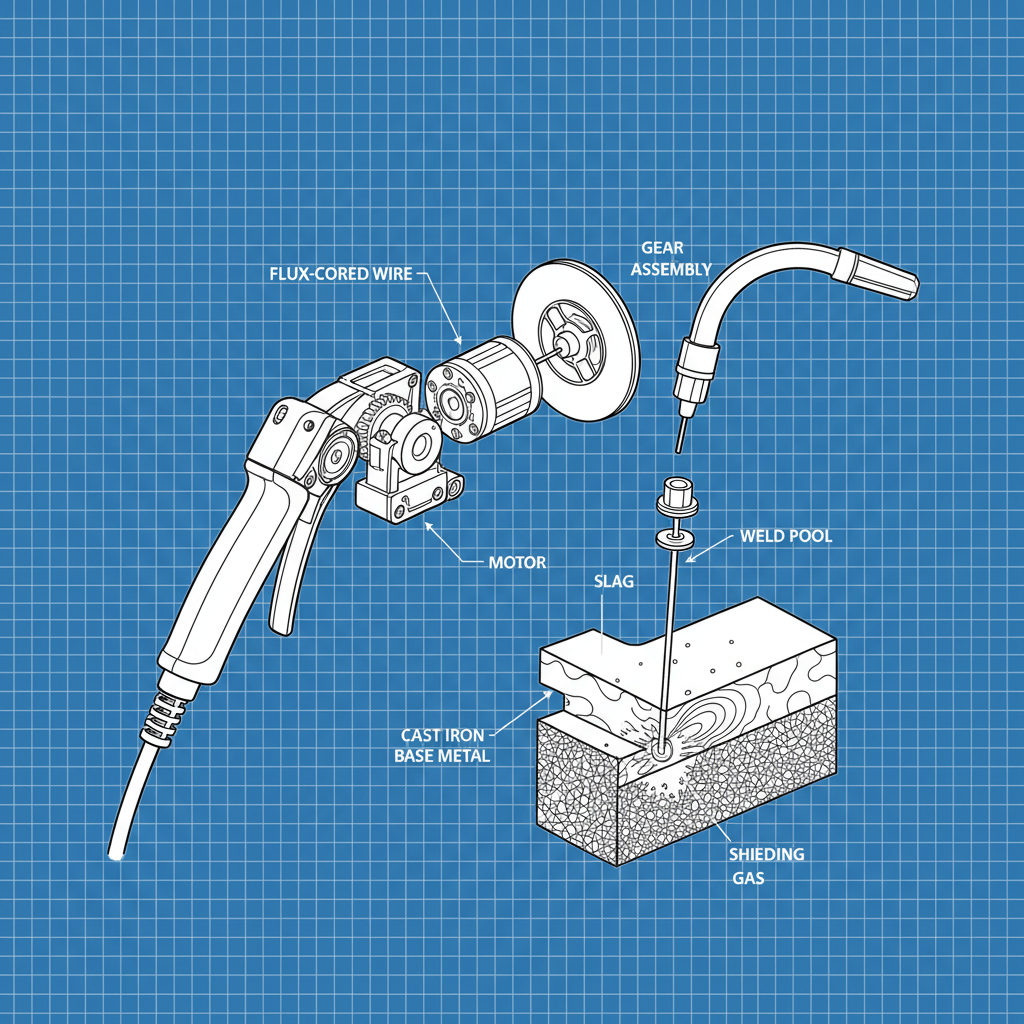
Cast iron's inherent properties—high carbon content, brittleness, and tendency to crack—make it more challenging to weld than steel. Rapid heating and cooling can induce significant stress, leading to cracks. Traditional methods often struggle to create reliable, ductile welds. Flux core welding, however, offers a solution when paired with the correct techniques and consumables. The flux provides shielding and deoxidizing properties, helping to mitigate some of these issues. Properly preheating the cast iron is vital to reduce thermal shock during the welding process.
Key Considerations: Cast iron’s high carbon content leads to hard, brittle welds. Preheating helps minimize thermal shock and stress concentration. Selecting the right flux core wire is crucial for achieving adequate penetration and minimizing porosity.
Selecting the correct flux core wire is paramount for successful cast iron welding. Wires specifically designed for cast iron contain alloy elements (like nickel or silicon) that help create a more ductile and machinable weld deposit. Common choices include nickel-based wires (ENi-CI or ENiFe-CI) and high-silicon wires (ESI). Nickel-based wires are often preferred for applications where machinability is important, while high-silicon wires offer good crack resistance. It’s essential to consult the wire manufacturer’s recommendations for specific cast iron types and welding positions.
Wire Selection Guide:
• ENi-CI: Excellent machinability, good crack resistance.
• ENiFe-CI: Higher strength than ENi-CI, good for structural repairs.
• ESI: Cost-effective, good crack resistance, lower machinability.
Effective flux core welding cast iron requires a specific approach. Preheating the cast iron to 300-500°F (150-260°C) is crucial to slow the cooling rate and reduce stress. Use a low heat input setting on your welding machine and employ a stringer bead technique, avoiding excessive weaving. Short weld beads (1-2 inches) are recommended, followed by peening to relieve stress. Allow each bead to cool slightly before applying the next. Post-weld cooling should be gradual, ideally by covering the weld area with insulating material.
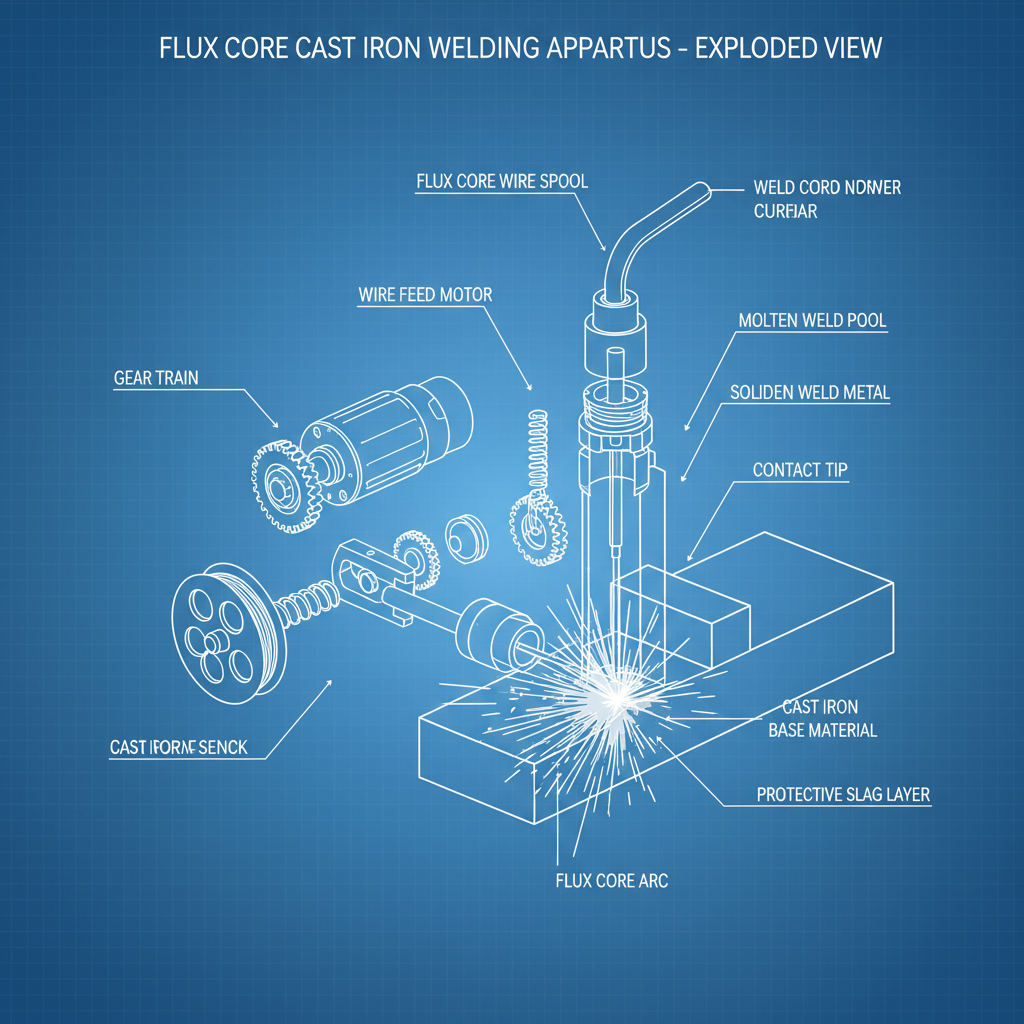
Despite careful preparation, issues can arise during flux core welding cast iron. These include cracking, porosity, and lack of fusion. Cracking is often caused by excessive heat input or rapid cooling. Porosity can be addressed by ensuring proper cleaning of the base metal and using the correct shielding gas if applicable (some flux core wires are self-shielded, others require external gas). Lack of fusion can result from insufficient heat input or improper travel speed. Careful monitoring of welding parameters and adherence to best practices will minimize these problems.
Welding cast iron presents similar safety concerns as welding other metals. Always wear appropriate personal protective equipment (PPE), including a welding helmet with the correct shade lens, gloves, and a fire-resistant jacket. Ensure adequate ventilation to avoid inhaling fumes. Be mindful of the potential for sparks and fire hazards, and clear the work area of flammable materials. Follow all safety guidelines provided by the welding machine manufacturer and the wire supplier. Always disconnect the power source before making any adjustments or repairs.
Successful flux core welding cast iron requires careful consideration of material properties, appropriate technique, and diligent attention to safety. By following the guidelines outlined in this article, welders can achieve strong, reliable, and durable repairs on cast iron components. Investing in the correct consumables and mastering proper preparation and execution are key to maximizing weld quality and minimizing the risk of failure.
Thorough preparation is crucial. Start by cleaning the cast iron to remove any rust, oil, paint, or other contaminants. Grinding or wire brushing can be effective. Then, bevel the edges to create a V-groove, allowing for better weld penetration. Preheating the cast iron to 300-500°F (150-260°C) is essential to minimize thermal shock and reduce the risk of cracking. Ensure the area is dry before welding.
While technically possible, welding cast iron without preheating significantly increases the risk of cracking. The rapid cooling can create high stress concentrations, leading to fractures. Preheating slows the cooling rate, allowing the cast iron to distribute heat more evenly and reducing stress. It’s generally not recommended to skip preheating for any substantial cast iron weld.
Cracking is often caused by a combination of factors. Rapid heating and cooling create thermal stress. High carbon content in cast iron makes it brittle. Excessive heat input can exacerbate these issues. Insufficient preheating, improper weld bead sequence, and lack of peening can also contribute to cracking. Using the correct flux core wire and following proper welding techniques are crucial to prevent cracking.
Peening involves lightly hammering the weld bead with a rounded-end tool (like a peening hammer) immediately after welding. This process compresses the weld metal and introduces compressive stresses, which counteract tensile stresses that can lead to cracking. Peening helps relieve stress and improve the weld's resistance to cracking. It's a critical step in many cast iron welding procedures.