TEL:
+86-13102802206
TEL:
+86-13102802206
 Email:
fencenetting@china.com
Email:
fencenetting@china.com
 Language
TEL:
+86-13102802206
Email:
fencenetting@china.com
Language
Language
TEL:
+86-13102802206
Email:
fencenetting@china.com
Language


gabion basket retaining wall is a key solution in the Water conservancy, environment and public facilities management industry, specifically within Ecological protection and environmental governance industry and Soil and Water Conservation and Ecological Restoration. This article explores how Hebei Tengyuan Wire Mesh Products Co.,Ltd supports professionals with durable, high-performance products, and explains why this product is an ideal choice for businesses in these sectors.
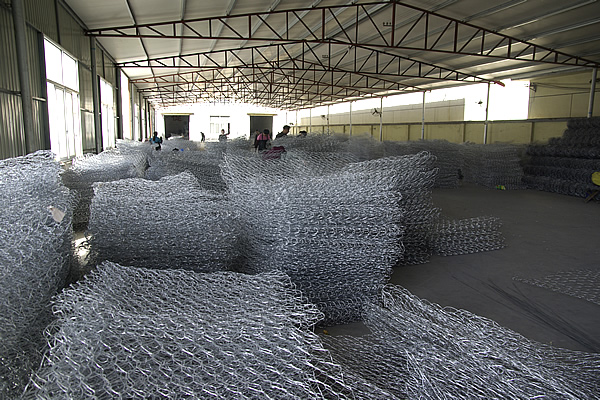
A gabion basket retaining wall is a mass-gravity structure assembled from modular wire-mesh cages filled with graded stone. In water conservancy, ecological protection, and soil and water conservation projects, gabion retaining walls deliver stable, free-draining support for banks, channels, and slopes while accommodating ground movement. Compared with rigid concrete walls, gabion wall baskets dissipate hydraulic energy, relieve pore-water pressure, and integrate vegetation, making them ideal for nature-based solutions.
Technically, Tengyuan’s gabion wall cages are manufactured using double-twisted hexagonal mesh for anti-unravel performance. Typical wire diameters range from 2.0–3.4 mm, with coatings such as hot-dip galvanized, Zn–Al alloy (Galfan), and optional PVC/PE for enhanced corrosion resistance in aggressive or marine environments. Common mesh apertures include 60×80, 80×100, and 100×120 mm, with standard box sizes like 2×1×1 m and 3×1×1 m, diaphragmed at 1 m intervals to maintain fill stability. Recommended stone size is usually 100–250 mm, clean and angular. Accessories include lacing wire, spirals, hog rings, and geotextiles where separation or filtration is needed.
Hebei Tengyuan Wire Mesh Products Co.,Ltd combines advanced mesh weaving, strict dimensional checks, and coating uniformity control to deliver consistent gabion wall design performance from procurement to site installation for EPCs, municipalities, and environmental authorities.
In river training, channel lining, and bank stabilization, gabion wall systems provide flexible resistance to scour and flow-induced forces while maintaining high permeability. For culvert inlets/outlets, bridge abutments, and spillways, gabion retaining walls act as energy dissipators and protect toes against undercutting. On slopes and cuts, they function as gravity walls or stepped terraces that can be vegetated for long-term ecological integration. Coastal and lakefront revetments also benefit from gabion wall cages where wave action and fluctuating water levels demand both robustness and adaptability.
Hebei Tengyuan brings application-specific guidance to gabion wall design—advising on mesh type, coating selection, rock gradation, and construction methods for riverine, urban drainage, and slope stabilization schemes. Whether your spec calls for a gabion wall, a stepped gabion retaining wall, or architecturally exposed gabion wall baskets, Tengyuan supports end-to-end delivery at scale.
Total cost of ownership for a gabion basket retaining wall compares favorably with rigid alternatives. Capital expenditure is optimized by modular supply, local rock sourcing, minimal formwork, and limited drainage components. Operating expenditure is low: the structure is self-draining, vegetation reduces erosion over time, and routine inspections typically focus on joints, lacing, and localized settlement. Where aggressive environments exist, PVC/PE-coated or Zn–Al coated mesh extends service life and protects ROI for long-horizon assets.
B2B users in the ecological protection and environmental governance sector—municipal owners, river basin authorities, and EPC contractors—value the fast buildability of gabion retaining walls, particularly on constrained or wet sites where concrete logistics are challenging. Feedback highlights predictable scheduling, straightforward quality control (mesh integrity, fill gradation, panel alignment), and ease of future modification or extension. With Tengyuan’s consistent mesh geometry and coatings, clients report secure lacing and tight panel fit-up, which improves installation efficiency and reduces rework. Over service life, typical maintenance includes vegetation management, post-flood inspection, and occasional top-up of displaced stones at high-energy locations, keeping lifecycle costs transparent and manageable.
Global infrastructure programs increasingly prioritize nature-based solutions (NbS) and resilient design. Gabion basket retaining walls align with these directives by enabling permeable, vegetated, and adaptable systems that reduce downstream impacts and enhance biodiversity. Their use of locally sourced stone can lower transport emissions, while steel wire is recyclable at end of life. In many jurisdictions, procurement is shifting toward solutions that mitigate flood risk, address heat and drought resilience, and support ecological restoration—areas where gabion wall cages are proven performers.
Project sponsors and lenders are also emphasizing measurable environmental outcomes and whole-life carbon. Designers are adopting digital workflows for gabion wall design, integrating geotechnical modeling, BIM coordination, and standardized QA records. Hebei Tengyuan Wire Mesh Products Co.,Ltd responds with reliable product traceability, coating options matched to exposure class, and technical collaboration that helps specifiers meet sustainability targets without compromising safety or schedule. From flood defense to green corridors, Tengyuan supports the sector’s transition to durable, eco-conscious infrastructure.
For water conservancy, ecological protection, and soil and water conservation projects, a gabion basket retaining wall delivers the right combination of stability, permeability, and environmental compatibility. Whether used as a gabion wall for riverbanks, a stepped gabion retaining wall on slopes, or architecturally exposed gabion wall baskets, Hebei Tengyuan’s consistent mesh quality and proven coatings help ensure long-term performance and low lifecycle cost. Partner with a manufacturer that understands your technical and sustainability goals.