TEL:
+86-13102802206
TEL:
+86-13102802206
 Email:
fencenetting@china.com
Email:
fencenetting@china.com
 Language
TEL:
+86-13102802206
Email:
fencenetting@china.com
Language
Language
TEL:
+86-13102802206
Email:
fencenetting@china.com
Language


If you’ve spent time in fabrication shops or mesh weaving lines, you already know there’s wire—and then there’s Stainless Wire. To be honest, the gap shows up in uptime, scrap rates, and (surprisingly often) how clean your dies stay. Over the last year, demand has shifted toward tighter tolerances, traceability, and salt-spray performance for marine and food-contact jobs. Many customers say they’re moving away from generic imports to vendors that will actually share heat lots and test data.
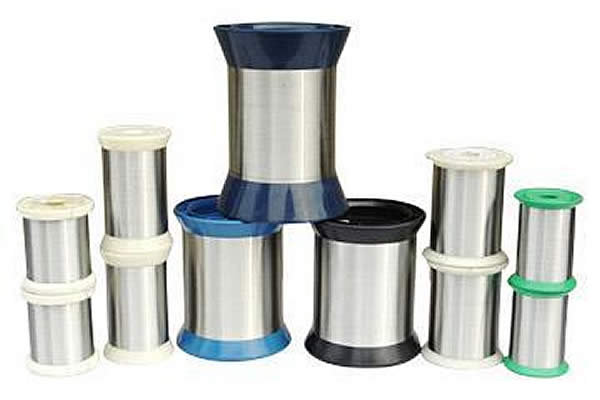
Typical uses include wire-drawing feedstock, mesh weaving, soft pipe, isolation layers, kitchen clean balls, steel rope, filter media, springs and nails, medicine, and petrochemical lines. Origin: No.3 Building, weier Road 11, Anping County, Hebei China. In fact, Stainless Wire from Anping has a reputation for consistent drawability—something operators quietly appreciate at 2 a.m. changeovers.
| Parameter | Spec (≈) | Notes |
|---|---|---|
| Grades | 304/304L, 316/316L, 430, 321 | Common for mesh, rope, springs |
| Diameter range | 0.02–8.0 mm | Finer gauges on request |
| Tensile strength | 500–2,000 MPa | Depends on grade/condition; spring wire per ASTM A313 |
| Finish | Bright, matte, annealed, soap-coated | Pickled & passivated options |
| Tolerance | ±0.003–0.02 mm | Tighter for medical filtration |
| Standards | ASTM A580/A580M, ASTM A313 | Lot-certified; ISO 9001 plants |
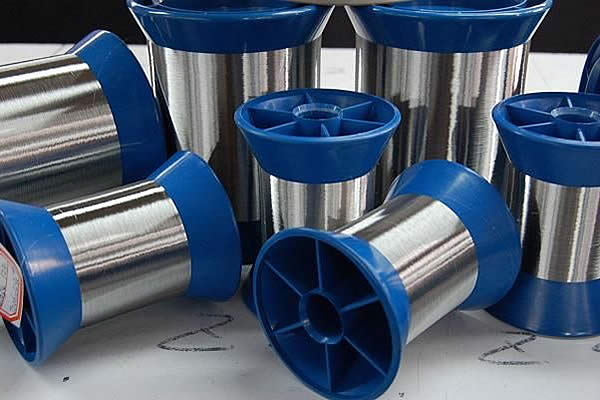
Typical service life: around 10–25 years in mild environments; shorter in chloride-heavy atmospheres unless you specify 316/316L. We’ve seen filter lines double run-time after switching to Stainless Wire with cleaner surface finish—less fouling, fewer breaks.
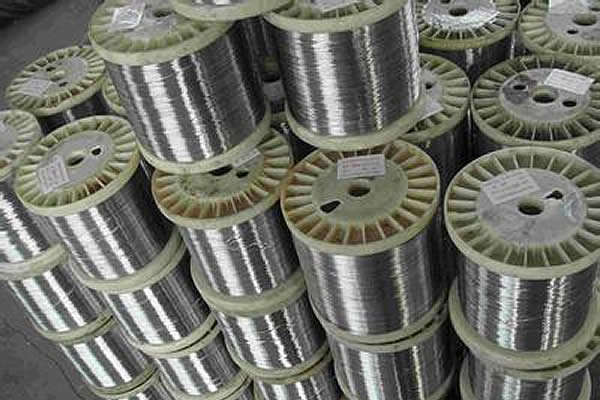
Industries: petrochemical, food & beverage, medical filtration, marine rope, construction ties, electronics shielding, and yes, those stubborn kitchen clean balls. Advantages include corrosion resistance, hygienic surfaces, repeatable drawability, magnetic options (430), and spring-back behavior for clips and fasteners.
Custom diameters, spool dimensions, residual lubricant limits, ultra-flat ovality for weaving, and bath-certified passivation. Test data snapshots (typical): 304 spring wire TS ≈ 1,300 MPa; elongation 2–5%; 316 salt spray 96 h—no red rust; Ra surface ≈ 0.2–0.6 μm.
| Vendor | Lead Time | Certifications | Traceability | Notes |
|---|---|---|---|---|
| TY Wire Mesh (Anping) | 7–15 days | ISO 9001; ASTM lot reports | Heat-lot to spool | Strong on mesh-weaving grades |
| Global Generalist | 15–30 days | ISO 9001 | Partial | Broader catalog, higher MOQ |
| Low-cost Trader | Variable | — | Limited | Price-led; check specs carefully |
Customer voice: “Dimensional scatter mattered more than we thought. With better control, our die life improved, which nobody complains about.”
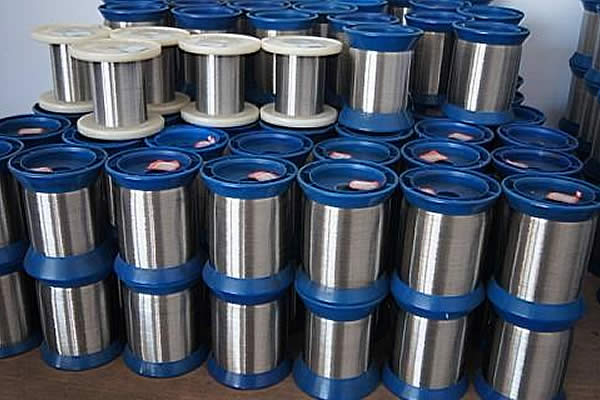
Common references: ASTM A580/A580M for general stainless wire, ASTM A313 for spring wire, ISO 6892-1 for tensile testing, ASTM B117 for salt spray, and ISO 9001 for quality systems. Ask for mill certs and test reports per lot; it saves headaches later.