TEL:
+86-13102802206
TEL:
+86-13102802206
 Email:
fencenetting@china.com
Email:
fencenetting@china.com
 Language
TEL:
+86-13102802206
Email:
fencenetting@china.com
Language
Language
TEL:
+86-13102802206
Email:
fencenetting@china.com
Language


In demanding industrial environments, the selection of materials is paramount. Stainless wire stands as a cornerstone material, renowned for its exceptional durability, corrosion resistance, and versatility. This high-performance material is critical across an array of sectors, driving innovation and reliability in applications where conventional materials falter.
The global market for stainless steel products, including various forms of stainless wire, is experiencing robust growth. Driven by escalating infrastructure development, burgeoning demand in the automotive and aerospace industries, and the persistent need for hygienic solutions in food processing and medical sectors, the trajectory for high-grade stainless steel products remains strong. Emerging trends highlight a shift towards more specialized alloys, finer gauges, and enhanced surface finishes to meet increasingly stringent performance requirements. Furthermore, the integration of automation and advanced manufacturing techniques is optimizing production efficiency and product consistency, ensuring that the supply of materials like stainless wire can meet evolving industrial demands. The market also sees a growing emphasis on sustainability, with manufacturers focusing on energy-efficient production processes and the recyclability of stainless steel products.
Relatedly, the demand for sophisticated derivatives such as stainless steel cable and stainless cable is also on the rise, supporting critical applications from structural rigging to control mechanisms. The robustness of stainless steel ensures long service life and minimal maintenance, factors highly valued in today's industrial landscape.
The production of high-quality stainless wire is a complex, multi-stage process, demanding precision and adherence to strict metallurgical principles. It begins with carefully selected raw materials, typically stainless steel billets or rods, which undergo a series of transformations to achieve the desired wire form and properties. The primary material grades include Austenitic Stainless Steels (e.g., 304, 304L, 316, 316L), known for their excellent corrosion resistance and ductility, and occasionally Duplex or Martensitic grades for specialized applications requiring higher strength.
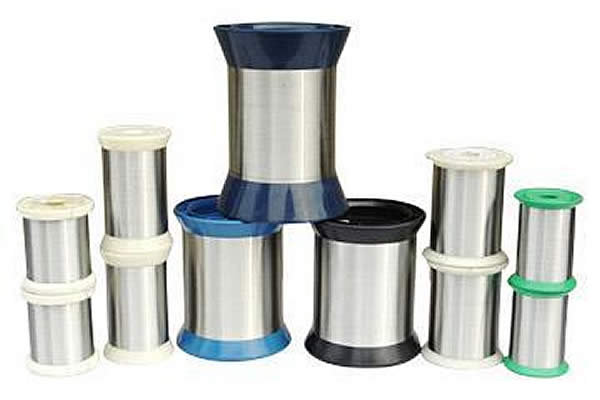
| Parameter | SS 304 (UNS S30400) | SS 316 (UNS S31600) | SS 316L (UNS S31603) |
|---|---|---|---|
| Primary Alloying Elements | 18% Cr, 8% Ni | 16% Cr, 10% Ni, 2% Mo | 16% Cr, 10% Ni, 2% Mo, Low C |
| Typical Diameter Range | 0.02mm - 10mm | 0.02mm - 10mm | 0.02mm - 10mm |
| Tensile Strength (MPa) (Annealed) | 515-690 | 515-690 | 485-655 |
| Yield Strength (0.2% Offset, MPa) (Annealed) | 205-310 | 205-310 | 170-275 |
| Elongation (%) | ≥40 | ≥40 | ≥40 |
| Corrosion Resistance | Good, general purpose | Excellent, especially against chlorides | Excellent, very good for welding, intergranular corrosion resistance |
| Service Temperature (Max, °C) | ~870 | ~870 | ~870 |
Note: Specific values can vary based on wire temper (e.g., full hard, quarter hard), drawing reduction, and heat treatment conditions. Consult manufacturer specifications for precise data.
The intrinsic properties of stainless wire provide a multitude of technical advantages that make it indispensable across a wide spectrum of industrial applications. Its superior performance characteristics directly translate into enhanced operational efficiency, reduced maintenance costs, and extended service life for end-products.
The versatility of stainless wire allows for its deployment across diverse critical industries:
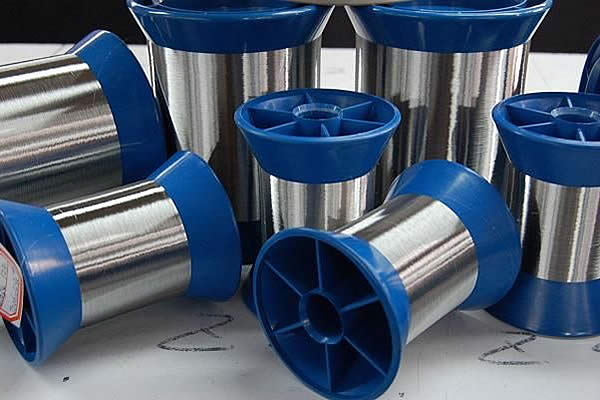
The demonstrated advantages in these scenarios, such as energy saving through reduced maintenance cycles and the unparalleled corrosion resistance ensuring long product life, underscore the economic and operational benefits of specifying stainless wire in critical applications.
Selecting the right supplier for stainless wire is a critical decision that impacts project timelines, product quality, and overall cost-efficiency. B2B decision-makers must evaluate vendors based on a comprehensive set of criteria that go beyond mere price per kilogram.
Off-the-shelf stainless wire may suffice for general applications, but complex or high-performance projects often necessitate customized solutions. Tailored wire specifications can significantly enhance performance, optimize manufacturing processes, and reduce total cost of ownership. For instance, a specific tensile strength or elongation might be crucial for spring manufacturing, while a particular surface roughness is vital for medical applications to ensure biocompatibility and minimize friction.
Vendors capable of delivering customized wire diameters from micron sizes up to several millimeters, with precise control over mechanical properties and surface finishes, offer distinct advantages. This flexibility allows engineers to design components with optimal performance characteristics, avoiding compromises inherent in standard offerings. For example, in the production of stainless wire mesh for filtration, the exact wire diameter and mesh opening are critical to achieve desired filtration efficiency and flow rates. Partnering with a vendor offering this level of customization ensures that the final product meets exact operational demands.
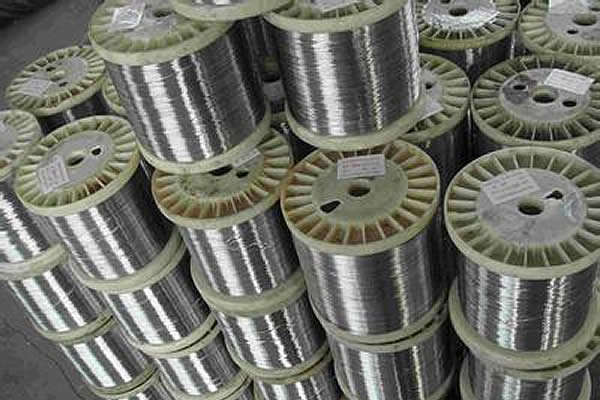
TY Wire Mesh, with years of experience and a comprehensive production line, specializes in providing custom solutions for diverse industrial needs, ensuring precise specifications and reliable performance.
Real-world applications powerfully demonstrate the value and performance of stainless wire in critical industrial settings. These case studies highlight how its unique properties solve complex challenges and contribute to long-term operational success.
A leading chemical manufacturer faced persistent issues with corrosion and premature failure of their process filters, which were made from standard carbon steel wire mesh. The aggressive chemical environment (acidic solutions and high temperatures) led to frequent replacements, incurring significant downtime and maintenance costs. By switching to stainless wire mesh fabricated from 316L stainless wire, the client achieved a dramatic improvement. The molybdenum content in 316L provided superior resistance to chloride corrosion and high-temperature oxidation. The new filters demonstrated a service life increase of over 300%, drastically reducing maintenance interventions and ensuring consistent product purity. This transition resulted in a 40% reduction in annual operational costs related to filtration and a significant boost in production uptime.
A major civil engineering project involving the construction of sea defenses and bridge supports in a highly saline coastal area required reinforcement materials that could withstand severe environmental degradation. Traditional steel rebar quickly succumbed to corrosion, leading to spalling concrete and structural integrity concerns. The solution involved utilizing pre-stressing stainless cable and stainless steel tie wire for reinforcing critical concrete elements. The inherent corrosion resistance of the stainless steel prevented the ingress of chlorides and subsequent rust, thereby extending the projected service life of the infrastructure from 50 years to over 100 years. Although the initial material cost was higher, the long-term savings in maintenance, repairs, and the assurance of structural longevity far outweighed the initial investment, demonstrating significant life-cycle cost benefits.
A manufacturer of advanced surgical devices required extremely fine gauge wire for intricate internal mechanisms that demanded both high strength and absolute biocompatibility. Standard wire materials exhibited insufficient fatigue resistance and posed risks of material degradation within the human body. By collaborating with a specialist supplier, they sourced ultra-fine 304V (vacuum arc re-melted) stainless wire, precisely drawn to sub-millimeter diameters with a specific temper and surface finish. This specialized wire met the stringent ISO 13485 medical device standards, providing the necessary mechanical properties for reliable device function and ensuring patient safety. The supplier's rigorous quality control and certification processes were critical to the project's success.
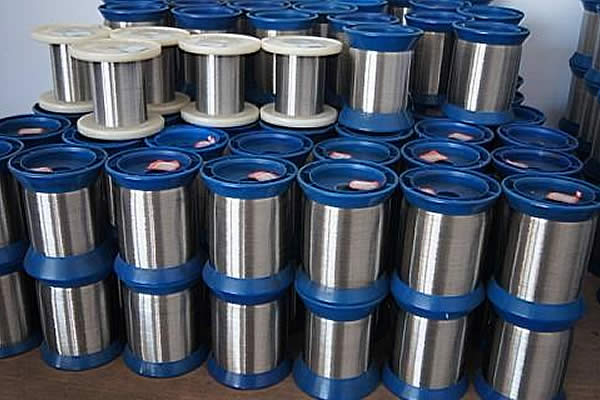
These examples underscore the critical role of high-quality stainless wire in overcoming industrial challenges, delivering superior performance, and ensuring long-term value.
Establishing trust and demonstrating authority are paramount in the B2B sector. Our commitment to excellence in the production and supply of stainless wire is underpinned by stringent quality protocols, industry certifications, and a track record of successful partnerships.
Our manufacturing facilities and processes are regularly audited and certified to internationally recognized standards, including:
With over 20 years of dedicated service in the wire manufacturing industry, we have cultivated extensive experience and a deep understanding of market demands. Our long-standing relationships with leading enterprises across the petrochemical, automotive, construction, and medical sectors attest to our reliability and product quality. Our client portfolio includes top-tier engineering firms, multi-national manufacturers, and critical infrastructure developers, all of whom rely on our consistent supply of high-performance stainless steel products.
Understanding the distinction between various grades and finishes of stainless wire is crucial for optimal material selection. Below is a comparison highlighting key performance differences.
| Feature | Standard SS 304 Wire (General Purpose) | Premium SS 316L Wire (Corrosion Resistant) |
|---|---|---|
| Corrosion Resistance | Good for freshwater, atmospheric exposure. | Excellent, superior in chloride-rich and acidic environments due to Molybdenum. |
| Weldability | Good, but prone to carbide precipitation in HAZ if carbon content is not controlled. | Excellent, low carbon content minimizes carbide precipitation and intergranular corrosion after welding. |
| Cost Efficiency | Lower initial cost, suitable for less demanding applications. | Higher initial cost, but offers superior longevity and reduced maintenance in harsh conditions, leading to better ROI. |
| Typical Applications | Kitchenware, general architectural, fasteners, standard stainless wire mesh. | Marine, chemical processing, medical implants, high-performance ss wire mesh. |
Our commitment to our clients extends beyond product delivery. We provide comprehensive support to ensure satisfaction and long-term partnership.
Our efficient supply chain management and advanced manufacturing capabilities enable us to maintain competitive lead times. For urgent requirements, expedited production and shipping options can be discussed with our sales team. We prioritize transparent communication regarding order status and delivery schedules, ensuring you are always informed.
We stand behind the quality of our stainless wire products. All materials are guaranteed to meet the specified chemical composition, mechanical properties, and dimensional tolerances as per the agreed-upon standards and order specifications. In the unlikely event of a material defect, our warranty covers replacement or credit in accordance with industry standards and our terms of sale.
Our dedicated customer support team and experienced technical experts are available to assist with product selection, technical queries, and after-sales support. We offer:
Our goal is to be a trusted partner, providing not just products, but comprehensive solutions that contribute to your project's success.
The strategic integration of high-quality stainless wire is indispensable for modern industrial applications requiring unparalleled durability, corrosion resistance, and operational reliability. From its meticulous manufacturing process and adherence to global standards to its versatile application across petrochemical, construction, and medical sectors, stainless wire consistently proves its value.
As industries continue to evolve, demanding more efficient, sustainable, and robust material solutions, the role of specialized stainless steel products will only grow. Partnering with an expert manufacturer capable of delivering both standard and customized stainless wire solutions ensures access to materials that meet the most stringent performance criteria, contributing to long-term success and innovation.